

Blocking Outside Noise for Urban Homes: Dealing with City Noise
City life can be the best: cafes to walk to, a short commute, and a sense of community. But when the sounds of the city streets invade your living room, the hum of traffic, sirens, and late-night conversations can have an adverse effect on your peace of mind and sleep. Fortunately, soundproofing your home doesn’t have to involve tearing out walls. By first addressing the largest leaks, like windows and doors, and then working inwards, you can turn a noisy apartment, condo, or house into a much quieter home by blocking outside noise.
In this article, we tell you exactly how you can block outside noise for a peaceful home.
Identify Your Noise
Before you invest in soundproofing, you first need to understand what type of sound you’re up against. Airborne noise is created by sources that project energy into the air. These are things like emergency vehicle sirens, horns, music from nearby businesses, conversations on the sidewalk, or the white noise hiss of tires on asphalt. Sound always travels via the path of least resistance, so it’s important to know that most noise enters through windows and doors because of the potential for air gaps/cracks around these operable units. These areas are followed by walls, ceilings, and finally, what acousticians call flanking noise paths, or the indirect transmission routes of vents, ducts, and electrical outlets.
Impact or structure-borne noise is significantly more difficult to stop, like big-box trucks introducing enough energy into the ground to shake the walls of a building, subway vibrations, or the low frequencies from your neighbor walking across their floor (your ceiling), which is incredibly annoying.
Read More: Smart Acoustic Treatments for Multi-Family Homes & Condos
Quick Noise Tests
Before investing in upgrades, try a few quick noise tests that reveal exactly where sound is slipping into your home.
- The fish tank test: Imagine filling the room with water up to the ceiling. Where water leaks is where sound would enter, so start your soundproofing there.
- Paper test: Close a window on a thin strip of paper. If you can pull it out easily, the seal is poor.
- Coin-rattle test: Place a coin on a window ledge or sill. Vibration=structure-borne energy.
You can also use professional tools to detect leaks. Many smartphone apps have free sound pressure meters which show dB spikes as you move near leaks in the building shell. You can even buy a cheap stethoscope, or use your own ear with a shop vac hose, to help pinpoint vibrations or air hissing through walls.
Acoustical Treatment vs. Soundproofing
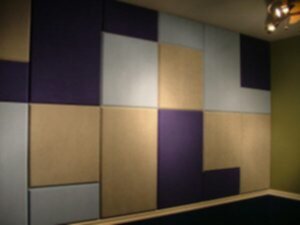
It’s important to know and understand the difference between absorbing echo and blocking sound. Acoustic treatments are things like acoustical foam and fabric wrapped fiberglass panels. They’re used to tame echoes and reverberations inside a room, but they will not block outside noise by themselves.
Soundproofing involves sealing any and all air gaps and cracks, adding density/mass to a wall or ceiling assembly, and mechanically decoupling the building materials to physically stop sound waves from entering your home. The key to blocking outside noise is focusing on isolation methods that add mass and create airtight seals, rather than just relying on absorptive materials inside the room.

construction noise caused by workers yelling and jackhammers and other tools creating noise and vibration
Windows: The Largest Source of Road Noise
If your home is near a highway, windows are almost always where the largest amount of sound leaks into a space. Thin, single layers of glass, hollow frames, and small leaks allow traffic noise to flood in. For some homes, installing acoustic window panels or air-tight inserts can add an extra layer of “glazing,” helping reduce traffic noise while maintaining natural light.
Good → Better → Best solutions
- Good: Add magnetic weatherstripping or exterior storm panels.
- Better: Install interior window inserts. Acoustic Geometry’s Climate Seal® Acoustic Window Inserts magnetically attach inside your existing window frame to create a sealed air gap. These Climate Seal inserts can reduce sound by up to 80% depending on the window type, with assemblies tested as high as STC 51. Products that use a magnetic window below seal create a flexible yet airtight connection around the frame, dramatically improving the insert’s effectiveness.
- Best: Complete window replacement with double or triple-pane window assemblies. Effective, but expensive and requires intrusive construction.
Proof in Numbers: Window STC Ratings and Reduction
A typical double-hung window might have an STC rating of 24. With a Climate Seal insert, it can increase to STC 37. A triple casement can go from STC 27 to STC 44 with the same insert. That’s a big jump in real-world traffic noise reduction.
Another highly effective approach is secondary glazing for windows, which creates a second sealed layer inside the frame and can achieve similar noise reduction results as full replacement.
Doors: Tiny Gaps, Big Leaks
The second largest leak after windows is the door perimeter. Even a small gap around a door lets in an amazing amount of street noise.
To detect door leaks, try the dark room flashlight test. Block the windows, turn off the lights, and have someone shine a flashlight around the outside perimeter of the door. If you can see light shining through, sound is leaking there too. Reduce both air and light infiltration with closed-cell weatherstripping or an exterior rated threshold with a good sealing system.
Walls & Ceilings: When Constructing, Make It Count
Now that we’ve handled doors and windows, the next places to look are the walls and ceilings. Opening up a wall or ceiling is major construction, so these solutions are best if you’re remodeling or constructing new.
Tools of the trade:
-
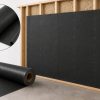
- Mass Loaded Vinyl (MLV): MLV is a flexible product that can add a dense layer of mass behind drywall to reduce airborne sound transmission. Adding a mass loaded vinyl barrier is a reliable and effective way to block airborne sound from entering through thin walls.
- Resilient Sound Isolation Clips (RSIC-1): RSIC-1 clips decouple drywall from framing to break the hard surface path that sound uses to travel from one side of a wall assembly to the other. Acoustic Geometry’s RSIC-1 clips have been shown to improve wall assemblies by up to 20 STC points. This process, known as acoustic decoupling, prevents vibrations from traveling directly through studs or joists and into your living space.
- Green Glue Dampening Compound: Green Glue is a viscoelastic dampening compound that is sold in tubes and installed between two layers of drywall. This means that noise reduction can be achieved without opening up a wall. The Green Glue is applied to the back of the new, second layer, and sandwiched between as the second layer is screwed into place.
- Acoustic Sealant: Use acoustic sealant to keep flanking paths sealed around seams, outlets, and vents.
- Acoustic Underlay: Acoustic underlay is great as cushioning under floors to reduce footfall from rooms above.
A “good, better, best” wall recipe
- Good: Add MLV + new ⅝″ drywall; seal all seams with acoustic sealant.
- Better: RSIC-1 clips + one or two layers of drywall.
- Best: Combination of RSIC-1 clips, drywall, Green Glue, and a second layer of drywall, outlets sealed and inspected for other flanking paths.
Installing an acoustic underlay (floor/ceiling) helps absorb impact noise from footsteps above and creates a quieter environment in multi-level homes.
Curtains, Panels & Décor: Do they help?
Many homeowners reach for curtains or panels in hopes of silence, and while some companies market curtains or wall absorbers as “soundproofing,” these products only calm interior echo and won’t succeed at blocking outside highway noise from traffic or neighbors.
Outdoor Sources: Hushing the Noise Before It Gets To The House
Sometimes the most effective way of blocking outside noise is to reduce it at the source. Cheap outdoor (and even indoor) fixes can cut the sound before it ever reaches your walls.
- Acoustic Barrier Curtain: Acoustic Geometry’s Barrier Curtain Door are designed for interior use, making them perfect for hanging over doorways or directly in the path of a noise source to block or reduce noise. Although not exterior-rated, they can effectively block out noise from entering a room.
- Echo Barrier® Panels: These panels can reduce hot-spot machine noise by 10-20 dB. These can be applied around HVAC units or even temporary fencing to reduce the outdoor noise of machines. For persistent mechanical sounds, an HVAC noise enclosure can surround outdoor condenser units with durable panels to cut down on compressor hum.
- Landscaping: Solid, gap-free fences and dense hedges help, but distance and mass are the key elements here.

Renter-Friendly Playbook (No Remodel Required)
Not every tenant can tear open walls or replace windows. Luckily, there still are options:
- Removable and renter-friendly Climate Seal window inserts
- Door Seal Kits for interior doors
- Acoustical curtains and weather-stripping
- Draft stoppers at thresholds
- Thick rugs, heavy drapes, or bookcases along exterior walls
- Sound machines or white noise apps at night to mask residual traffic noise
Even without major construction, renters can succeed in blocking outside noise by layering inserts, seals, and soft furnishings to dramatically cut the city’s constant buzz. These quiet house solutions won’t get you to remodel levels of sound isolation, but can drastically improve sleep and comfort.
Build-Your-Budget Plans
Instead of guessing, bundle these solutions by desired outcome.
- Starter Quiet ($500–$1,500): Door Seal Kit + acoustical curtains + weather-sealing.
- Serious Quiet ($1,500–$4,000): Climate Seal window inserts for main rooms + Green Glue and additional drywall
- Max Quiet (project pricing): RSIC-1 walls + MLV or Green Glue + upgraded window assemblies + optional exterior barrier curtains for HVAC.
Acoustic Geometry’s DIY acoustics guide has step-by-step solutions for each budget.
Frequently Asked Questions
Do foam panels stop road noise?
No, they only absorb echo inside a room and will not stop traffic noise.
What’s STC and why should I care?
Sound Transmission Class (STC) is a standardized way to measure how well walls, windows, or doors block airborne sound. According to the Acoustical Society of America, an STC rating of 40 is considered the threshold for privacy, effectively blocking normal conversational noise.
How can I really measure the difference?
Professional acoustic testing measures dB reduction, but you can use smartphone apps too.
Blocking outside noise is possible, even in the noisiest urban environments. By first addressing windows and doors, then bringing in additional mass, decoupling, or exterior barriers if needed, you can turn your noisy home into a peaceful one. If you’re building or remodeling, bring Acoustic Geometry in early to design isolation into the structure. If you’re a renter or DIY, our range of products, from Climate Seal window inserts to MLV, Green Glue, and RSIC-1 clips, make it easier than ever to reclaim some peace in the middle of the city.
For a no obligation quote, contact us to see how our team can help.


About author









Add comment
You must be logged in to post a comment.