
What Are RSIC Clips and When Should You Use Them?
Many soundproofing projects fail simply because people forget that sound does not only travel through the air. It also moves through framing, joists, studs, and drywall as vibration. That’s why simply adding acoustic panels, more insulation, or thicker drywall doesn’t always solve the problem. In many cases, the missing piece is decoupling. RSIC clips are designed to interrupt the vibration path that allows sound to move through a structure, making them valuable for contractors, architects, studio builders, home theater owners, and serious DIYers. Understanding what these clips do, where they work best, and what kind of performance to expect can help you build a more effective sound isolation system.
What Are RSIC Clips?
RSIC Stands for Resilient Sound Isolation Clip
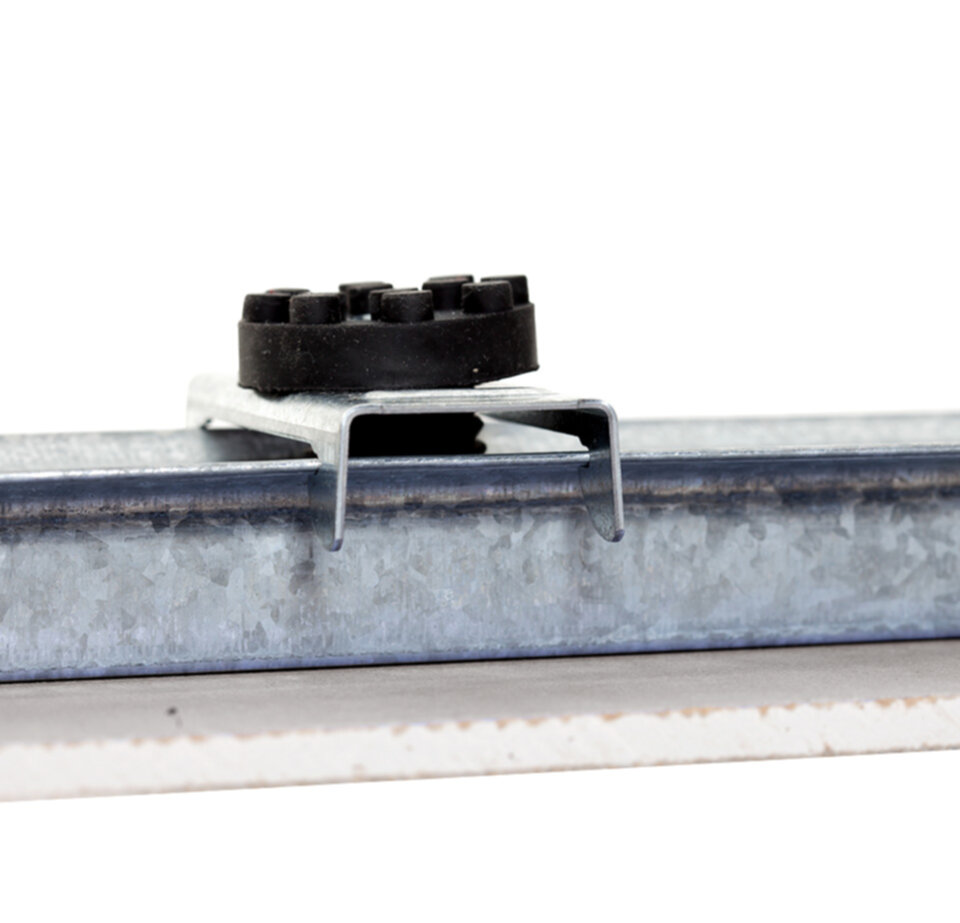
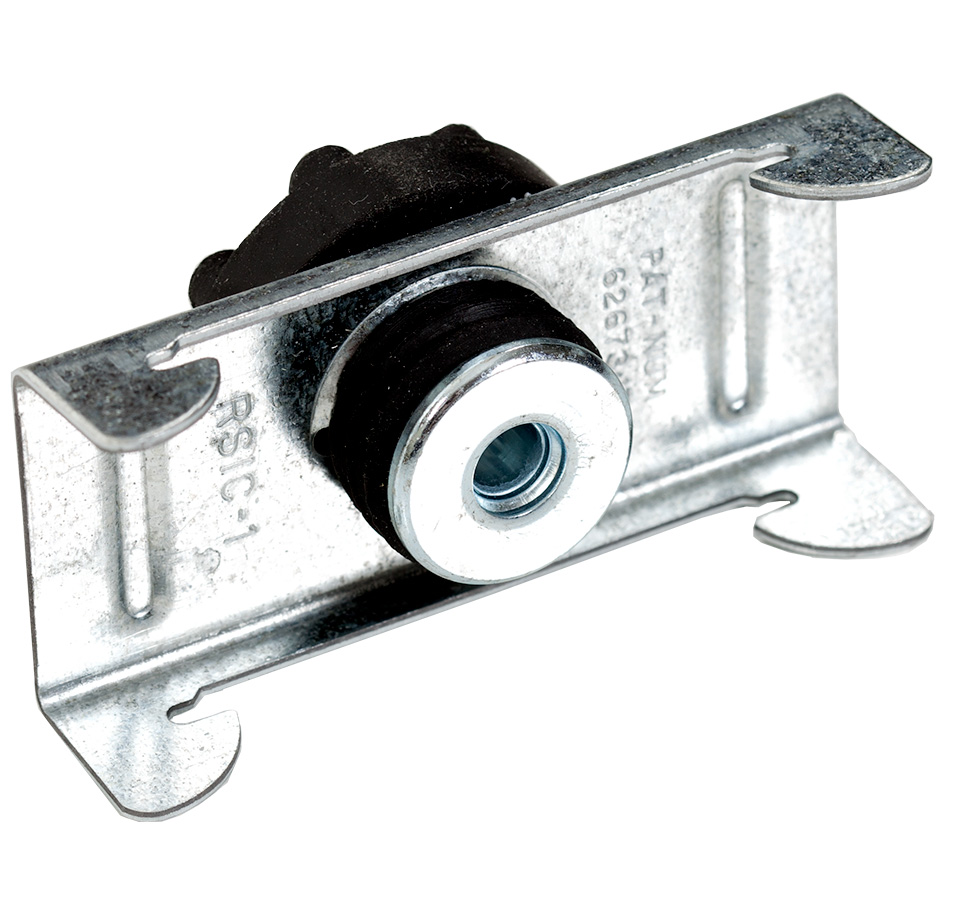
Resilient sound isolation clips are used in wall and ceiling assemblies to separate drywall from the framing structure. Instead of attaching drywall directly to studs or joists, the drywall is mounted to a hat channel that is supported by the clip.
By creating separation between the framing and the drywall, sound isolation clips help reduce the vibration transfer that contributes to noise transmission.
Several types of resilient isolation clips are available, but RSIC-1 clips are among the most widely recognized options for both residential and commercial applications. They are commonly used in recording studios, home theaters, offices, multifamily buildings, and anywhere privacy and noise control are important.
How RSIC Clips Work
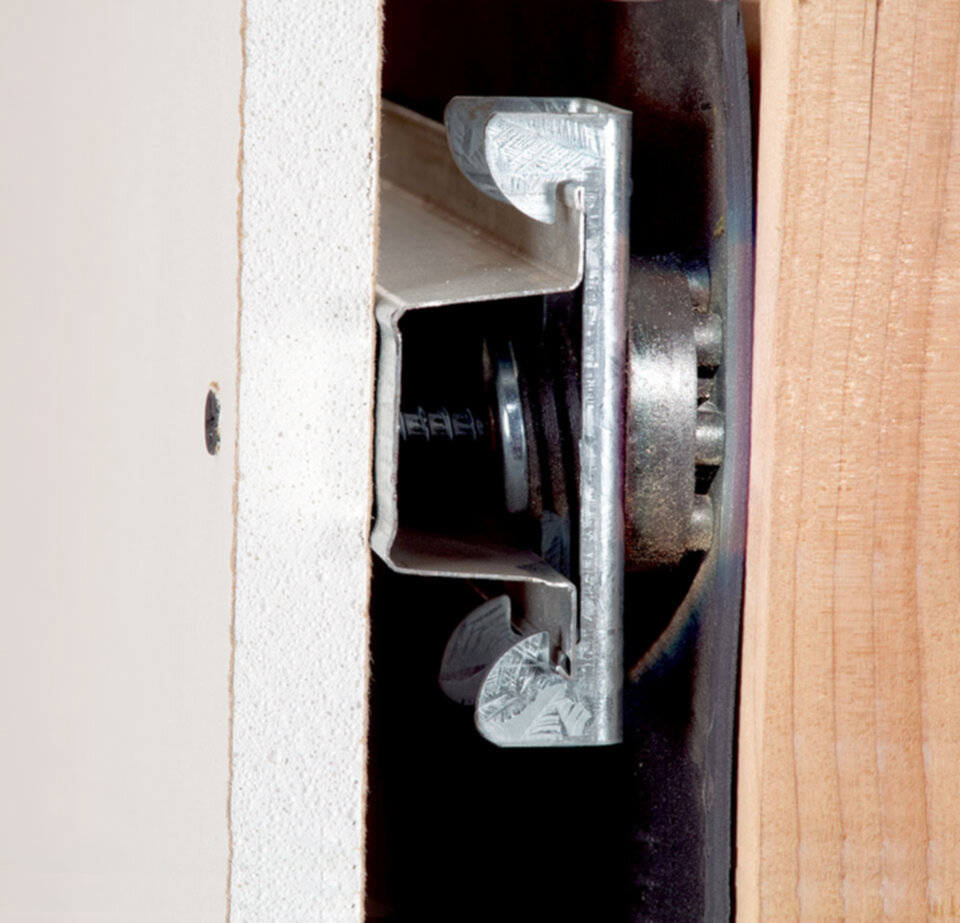
In a typical assembly, the clip is fastened to the framing, a hat channel snaps into the clip, and the drywall is attached to the channel rather than directly to the studs or joists.
This approach creates separation between the finished surface and the structure behind it. Instead of allowing vibration to pass directly into the drywall, the clip helps interrupt that path.
In other words, decoupling drywall reduces the hard connection that normally allows sound energy to move through a wall or ceiling assembly.
RSIC Clips vs. Standard Drywall Attachment
When drywall is attached directly to framing, the assembly becomes one continuous structure. Vibrations created by voices, televisions, footsteps, or mechanical equipment can travel through that rigid connection.
An isolated assembly changes the way vibration moves through the system.
| Assembly Type | How Drywall Is Attached | Sound Isolation Impact |
|---|---|---|
| Standard drywall | Directly to studs or joists | More vibration transfer |
| Resilient channel only | Drywall to channel | Better separation, but highly installation-sensitive |
| RSIC clips with hat channel | Drywall to isolated channel | Greater decoupling and vibration control |
This combination of clips and channel is one reason drywall isolation clips and acoustic isolation clips are often specified in higher-performance assemblies.
Why RSIC Clips Improve Sound Isolation
They Reduce Structure-Borne Vibration
Many people assume soundproofing is simply a matter of adding more mass. Mass is certainly part of the equation, but isolation also depends on controlling vibration.
Airborne noise and structure-borne noise behave differently. Voices, music, bass frequencies, footsteps, and mechanical equipment can cause framing components to vibrate, allowing sound to travel from one space to another.
Because ceilings and walls are physically connected, vibration control becomes especially important for both wall sound isolation and ceiling sound isolation.
This is where vibration isolation clips provide an advantage. By breaking the direct connection between drywall and framing, they help reduce one of the most common transmission paths. This is one reason decoupling is such an important part of many sound isolation assemblies.
Sound Isolation and Sound Absorption Solve Different Problems
Another source of confusion is the difference between isolation and absorption.
Sound absorption improves the sound quality inside a room. Acoustic panels, bass traps, and diffusers help control reflections and improve speech intelligibility or musical clarity.
Sound isolation serves a different purpose. Its job is to reduce how much sound enters or leaves a space.
The two approaches complement each other, but they solve different problems. If someone complains about echo inside a room, adding isolation clips will not fix that issue. Likewise, installing acoustic panels alone will not prevent sound from leaking into adjacent rooms.
Understanding that distinction helps ensure the right solution is applied to the right problem.
They Can Increase STC Performance
Properly installed RSIC-1 clips have demonstrated improvements of up to 20 additional STC points in certain wall assemblies. However, no clip guarantees a specific outcome.
The actual STC rating improvement depends on factors such as:
- Drywall layers and thickness
- Insulation within the cavity
- Acoustical sealant
- Damping compounds
- Framing configuration
- Flanking paths and penetrations
Like most soundproofing products, the clips are only one piece of the puzzle. The rest of the assembly still matters.
When RSIC Clips May Not Be the Right Solution
When You Only Need Better Room Acoustics
Not every acoustic problem requires sound isolation.
If the room suffers from excessive echo, harsh reflections, flutter, or poor speech clarity, absorption products are likely to provide better results than soundproofing clips.
Acoustic panels, bass traps, and diffusers are typically better solutions when the issue is entirely inside the room.

When You Cannot Open the Wall or Ceiling
Most clip systems are installed during new construction or renovation. Since the drywall must attach to a channel supported by the clips, access to the framing is generally required.
If the wall or ceiling cannot be opened, other noise control strategies may be more realistic.
Retrofitting is still possible, but it often involves more work than many people expect.
When Flanking Paths Are the Real Problem
Sound doesn’t always travel directly through the wall.
It can also travel through flanking paths such as:
- Doors
- Windows
- Electrical outlets
- Ductwork
- Floors and ceilings
- Gaps and penetrations
RSIC clips are very useful tools, but they aren’t magic. A high-performance wall can still disappoint if there are major sound leaks elsewhere.
RSIC Clip Installation Basics
How the Assembly Goes Together
The process isn’t particularly complicated, but the details are important.
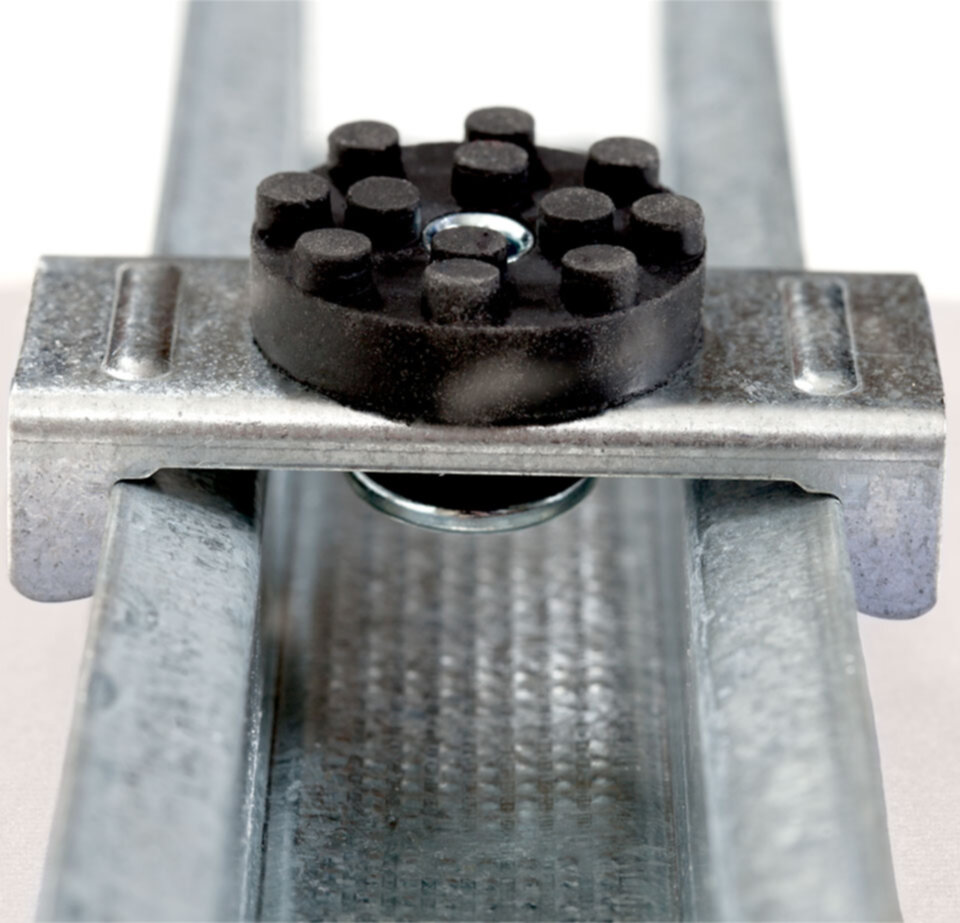
Clips are attached to wood or steel framing. Hat channel snaps into the clips, and drywall is fastened to the channel instead of directly to the structure. Perimeter gaps are maintained and sealed with an acoustical sealant.
The entire idea behind hat channel soundproofing is maintaining separation. Once you recreate a hard connection, the assembly loses much of the isolation the clips were intended to provide.
Common Spacing and Load Considerations
Installation requirements may vary by manufacturer, but many assemblies specify:
- Maximum horizontal spacing of 48 inches on center.
- Maximum design loads of approximately 36 pounds per clip.
- Approved fasteners rather than nails.
- A quarter-inch perimeter gap.
- Acoustical caulking around the perimeter.
Heavy fixtures and loads require special consideration. Improper loading can compromise performance and, in some cases, damage the assembly.
Why Installation Quality Matters
Even small mistakes can reduce effectiveness.
Common problems include:
- Accidentally screwing drywall to the studs
- Eliminating perimeter gaps
- Skipping acoustical sealant
- Using incompatible channel profiles
- Overloading the assembly
- Forgetting about outlets, ductwork, and doors
Another common issue involves attaching cabinets or other heavy objects directly to isolated drywall systems. Without proper backing or support, those additions can create unwanted rigid connections.
RSIC Clips vs. Resilient Channel
Understanding the Difference
People often compare resilient channel vs RSIC clips because both systems are used to decouple drywall and reduce vibration transfer.
Traditional resilient channel attaches directly to the studs, while the drywall attaches to the channel. It can work well, but the system is sensitive to installation errors.
RSIC systems introduce a clip between the framing and the channel, which creates additional separation between the framing and the drywall.
Why RSIC Clips Are Often Preferred for Higher-Performance Assemblies
Resilient channel can certainly work, but it is easier for small mistakes to compromise the system.
The combination of clips and hat channel provides a clearer isolated mounting system that many contractors find easier to install correctly. For projects where sound isolation is a higher priority, that added separation can make a noticeable difference.
For that reason, many studios, home theaters, and commercial privacy projects use soundproof wall assembly designs that incorporate clips and channel rather than resilient channel alone.
Which System Makes Sense for Your Project?
RSIC assemblies are often worth considering when:
- Higher sound isolation is a priority
- Loud audio systems are involved
- Ceiling assemblies require additional isolation
- The project includes a studio or home theater
- The budget supports higher-performance construction
Neither approach is automatically better in every situation. The right choice depends on the goals of the project and how carefully the system will be installed.
What Performance Improvements Should You Expect?
It Depends on the Full Wall or Ceiling Assembly
No clip works in isolation.
Performance depends on several parts of the system working together, including:
- Drywall thickness and number of layers
- Insulation within the cavity
- Damping compounds
- Acoustical sealant
- Framing design
- Doors and windows
- Electrical outlets and ductwork
- Flanking paths
Even the best clip cannot overcome weaknesses in other parts of the assembly.
Use RSIC Clips as Part of a System
One of the biggest mistakes people make is expecting a single product to solve every sound problem. That’s not how sound isolation works.
RSIC clips are most effective when they are part of a complete assembly. Depending on the level of performance you are trying to achieve, that assembly may also include multiple layers of drywall, cavity insulation, damping compound, acoustical sealant, and careful treatment of doors, outlets, ductwork, and other potential flanking paths.
The best wall and ceiling assemblies typically combine several elements rather than relying on any one product. The clips help reduce vibration transfer, while the additional layers, damping, insulation, and sealing measures work together to limit sound leakage.
Clips can make a big difference, but they cannot overcome weaknesses elsewhere in the system. Good isolation comes from all the pieces working together.
FAQs
When should you use RSIC clips?
They are most appropriate when higher levels of sound isolation are required and the wall or ceiling assembly is being built or renovated.
Can RSIC clips be used on ceilings?
Yes. In fact, clip systems are commonly used for ceiling sound isolation, especially in home theaters, studios, and multifamily construction.
Are RSIC clips the same as resilient channel?
No. Both systems are used for decoupling drywall and reducing vibration transfer, but RSIC assemblies add an isolation clip between the framing and the channel.
How much can RSIC clips improve sound isolation?
Performance varies. Significant improvements are possible, but individual results depend on the complete system and the quality of installation.
Do RSIC clips block all noise?
No. They reduce vibration transfer but cannot eliminate every sound path.
Are RSIC clips good for impact noise?
They can help reduce vibration-related noise transmission, particularly when impact energy creates structural vibration.
Are RSIC clips DIY-friendly?
Experienced DIYers can install them, but following spacing requirements and avoiding short circuits is essential.
Do you still need acoustic panels if you use RSIC clips?
Possibly. Isolation and absorption solve different problems. Acoustic panels improve the sound quality inside a room, while clip systems help reduce sound transmission.
Can RSIC clips be added to an existing wall?
Usually only if the existing drywall is removed. Because the clips become part of the assembly behind the finished surface, retrofits generally involve renovation work.
For projects where controlling vibration is just as important as adding mass, RSIC-1 clips offer an effective way to decouple drywall and reduce vibration transfer. They are not a magic solution, and they cannot compensate for poor sealing or untreated flanking paths. When combined with proper construction practices and a well-designed assembly, they can help reduce sound transmission and create quieter, more private spaces.

About author










Add comment
You must be logged in to post a comment.