
The Green Side of Acoustics: Sustainable Materials for Sound Absorption
The conversation around building performance has shifted. It’s no longer just about how a space looks or even how it functions acoustically – it’s about how those outcomes are achieved. Today, designers, homeowners, and business owners are actively looking for sustainable sound absorption strategies that improve comfort without relying on materials that create unnecessary environmental impact. In some cases, poor material choices lead to spaces that are both acoustically uncomfortable and environmentally inefficient – something more projects are actively trying to avoid.
That shift is not happening in isolation. Earth Day 2026’s “Our Power, Our Planet” message put collective action and clean-energy progress front and center, which provides a useful reminder that acoustic choices can support both comfort and broader sustainability goals. Whether you’re designing a home office, upgrading a recording space, or improving workplace acoustics, there is a growing demand for products that balance performance with environmental responsibility.
The good news is that the industry has caught up. Modern acoustic materials for green buildings now offer strong sound absorption, design flexibility, and measurable sustainability benefits. The challenge is knowing what actually qualifies as sustainable – and how to apply those materials effectively.
What Makes an Acoustic Material Sustainable
Sustainability in acoustics is often oversimplified. It’s not just about whether a product is recycled or “natural.” A truly sustainable acoustic product considers the entire lifecycle – from sourcing to installation to long-term performance.
At a practical level, sustainable acoustic materials tend to share a few core traits:
- Recycled or renewable raw materials
- Low VOC acoustic materials that support indoor air quality
- Long lifespan and resistance to degradation
- Recyclable acoustic products at end of life
- Responsible manufacturing and sourcing practices
What matters most is how these factors work together. A panel made from recycled content but prone to early failure is not sustainable in practice. Likewise, a durable product with poor indoor air quality performance undermines the goal of healthy interiors. This is what separates marketing claims from real performance – sustainability is measured over time, not just at the point of purchase.
Recycled versus renewable materials
Here’s where most buyers get tripped up. Recycled and renewable materials both support sustainability, but they solve different problems.
Recycled materials reduce waste streams. Products like recycled PET acoustic panels and cotton-based absorbers take post-consumer and post-industrial waste and turn it into high-performing sound control. Acoustic Geometry’s Poly Max panels fall into this category, using recycled cotton to divert material from landfills while delivering reliable absorption.
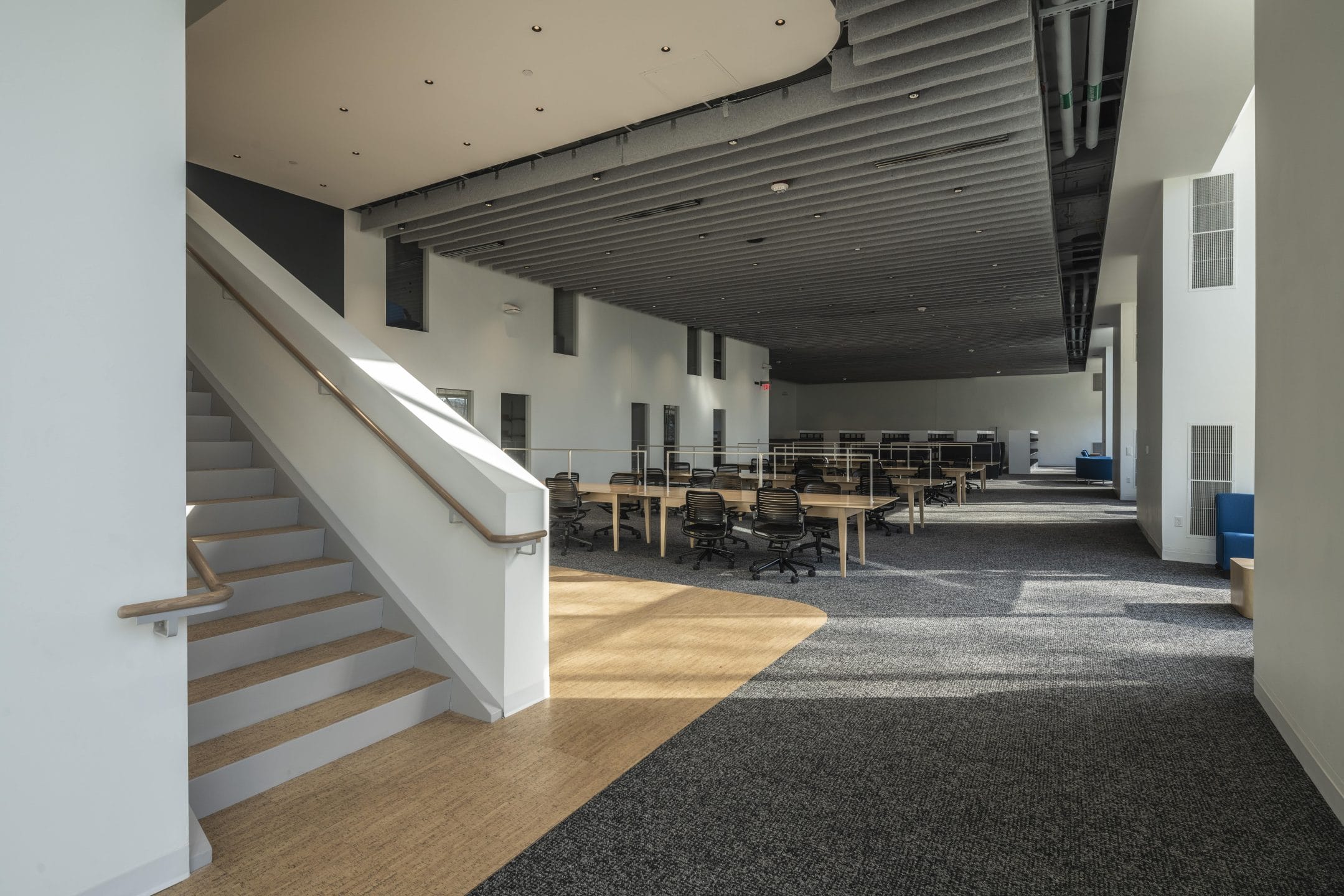
Renewable materials, on the other hand, come from resources that naturally replenish over time. Wood wool acoustic panels are a strong example. Made from wood fibers bound with cement, they offer a balance of durability, acoustic performance, and environmentally responsible sourcing.
Both approaches are valid, and in many projects, the most effective solutions come from combining recycled and renewable acoustic products based on how the space is actually used.
Performance and longevity as part of sustainability
There is a tendency to focus on what a product is made of, but how long it lasts matters just as much.
A durable acoustic panel that performs consistently for years reduces the need for replacement, minimizes material waste, and lowers the long-term environmental footprint of the space. This is especially important in commercial environments where wear and tear can quickly degrade lower-quality materials.
Recycled cotton products like Echo Eliminator panels illustrate this well. By repurposing waste fibers into dense, resilient absorbers, they not only support environmentally friendly soundproofing goals but also maintain performance over time. That combination – waste reduction plus longevity – is what defines real sustainability in acoustics.
Popular Sustainable Acoustic Solutions for Different Spaces
Once you understand what makes a product sustainable, the next step is choosing the right type for your space. Not every material performs the same way, and application matters more than most buyers expect.
PET felt panels for modern interiors
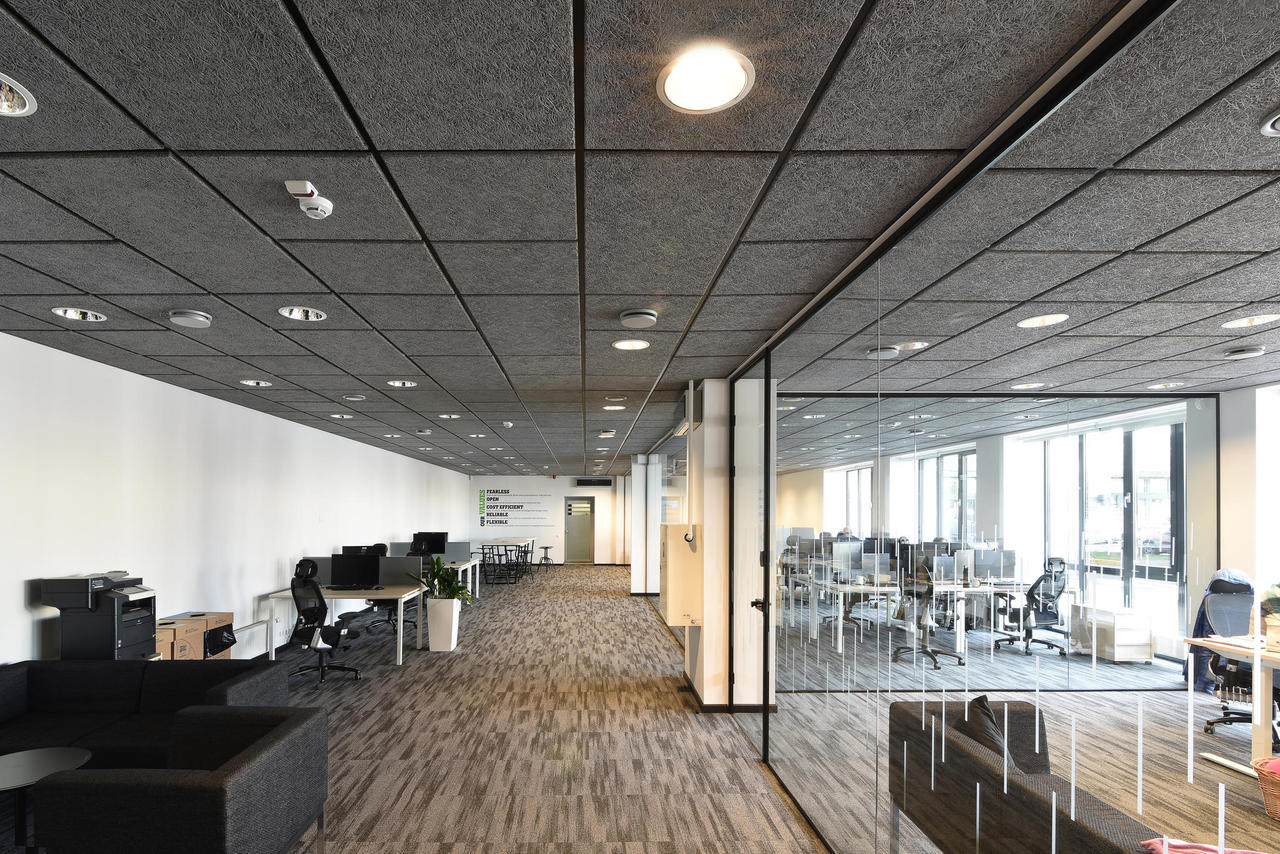
Recycled PET acoustic panels have become one of the most widely adopted eco-friendly acoustic panels, particularly in offices and contemporary interiors.
They are made from recycled plastic bottles, which immediately positions them as a strong option for green soundproofing materials. But their appeal goes beyond sustainability. PET felt panels are lightweight, easy to install, and available in a wide range of colors and shapes.
This makes them especially effective in:
- Open offices and conference rooms
- Schools and collaborative learning environments
- Residential spaces with modern design aesthetics
From an acoustic standpoint, they provide reliable mid- and high-frequency absorption, which is exactly what most rooms need to control echo and improve clarity – but like most absorptive materials, they work best as part of a broader acoustic strategy rather than a standalone solution.
Wood wool panels and ceiling systems
Wood wool acoustic panels offer a very different look and feel. Where PET felt leans modern and clean, wood wool introduces texture, depth, and visual warmth.
These panels are particularly appealing for eco-conscious interior acoustics, combining renewable sourcing with durability suited for high-traffic environments.
Common applications include:
- Schools and institutional buildings
- Restaurants and hospitality spaces
- Large open areas with high ceilings
They also perform well in ceiling systems, where controlling reverberation across large volumes of air becomes more important than localized wall treatments.
Stretch-Fabric systems and decorative acoustic treatments with recycled cores
Sustainability does not mean sacrificing design intent. In fact, some of the most effective acoustic wall panels with recycled content are also the most visually adaptable.
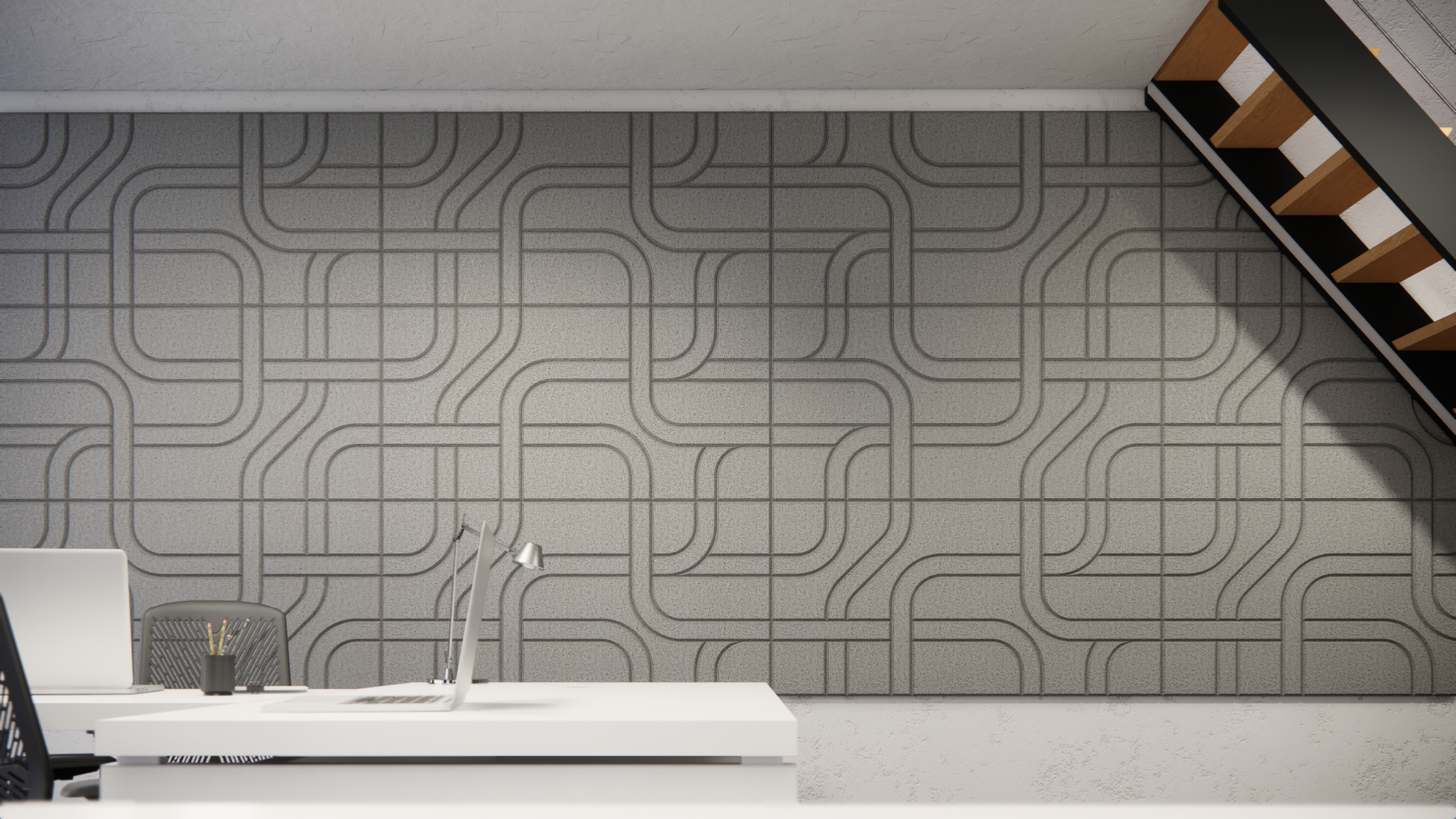
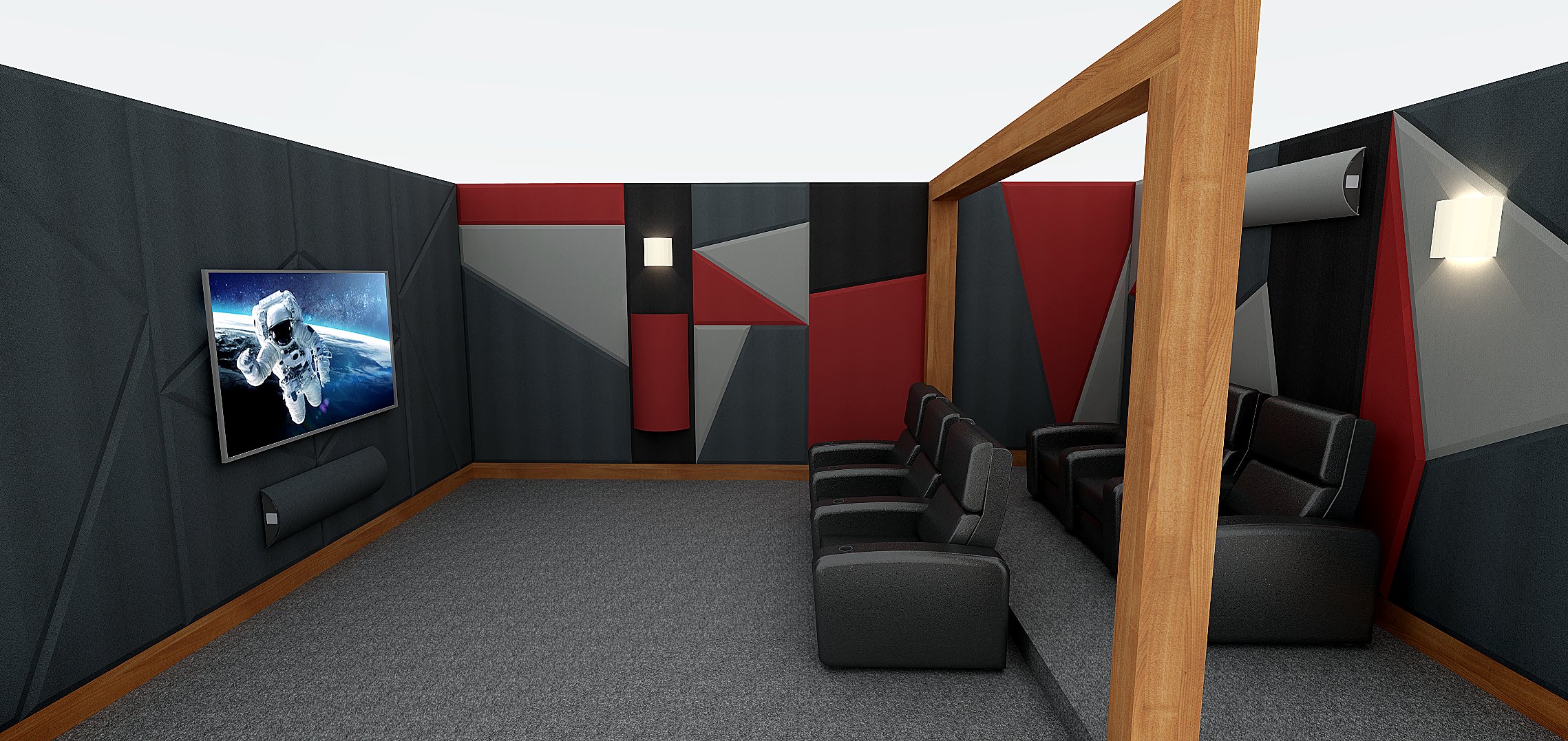
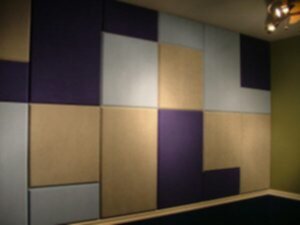
Site-fabricated stretch-fabric panel systems like WallMate use recycled cotton cores and offer strong acoustic performance with flexible design options. They can be tailored to match interior palettes, integrate into architectural features, or act as design focal points.
These are especially useful in:
- Home offices and media rooms
- Hospitality environments
- Conference and presentation spaces
This category also represents the growing demand for decorative sustainable acoustic panels. Instead of hiding acoustic treatment, these products make it part of the design language.
Sustainable Acoustics in Homes, Studios, and Offices
Different environments require different acoustic strategies. The key is aligning the material choice with the problem you are trying to solve.
Homes
Residential spaces often prioritize comfort and aesthetics over technical performance – but that does not make acoustics any less important.
Large, open living areas with hard surfaces tend to amplify echo. Home offices struggle with speech clarity during calls. Media rooms require controlled reflections for better listening experiences. It’s especially noticeable in open-concept homes, where sound has fewer barriers and reflections build quickly across connected spaces.
This is where home acoustic treatment ideas interact with sustainability. Eco-friendly acoustic panels can reduce reverberation while maintaining a clean, intentional design.
The goal is not perfection. It is creating a space that feels quieter, clearer, and more comfortable to live in.
Studios
Studios introduce a more technical challenge. Recording and music production environments require controlled acoustics across a wider frequency range.
While sustainable studio acoustics may sound like a compromise, it doesn’t have to be. With the right combination of absorptive panels, bass management strategies, and thoughtful placement, recycled and renewable materials can perform at a professional level. Sustainability doesn’t limit performance – it just requires more intentional product selection.
It also requires realistic expectations – sustainable absorptive materials can handle reflections effectively, but low-frequency control still depends heavily on placement, room layout, and overall system design.
Offices
Workplace acoustics directly impact productivity, but most offices now include a mix of open work areas, meeting rooms, and smaller focus spaces – each with different needs.
Open offices tend to struggle with overall noise buildup and echo. Without enough absorption, conversations carry and create a constant background distraction. This is where green building acoustics strategies and well-planned acoustic solutions for offices come into play, using ceiling and wall treatments made from sustainable materials to reduce reverberation without compromising environmental goals.
Meeting rooms and conference spaces shift the focus to speech clarity. Controlling reflections improves intelligibility, especially during video calls, while healthy indoor acoustic materials help maintain air quality in enclosed environments.
Smaller focus rooms benefit from more controlled absorption, creating a quieter, more usable space for individual work. Across all of these environments, the goal is the same: supporting acoustic comfort and sustainability through materials that perform well and align with long-term design priorities.
How Sustainable Acoustic Solutions Compare to Traditional Ones
Sustainable materials are not replacing traditional options across the board – but they are changing the conversation.
Acoustic foam versus newer eco-conscious products
Acoustic foam still has a place in certain applications. It’s lightweight and easy to install. However, it falls short in durability, aesthetics, and long-term environmental impact.
Newer materials like recycled PET acoustic panels and wood wool acoustic panels offer:
- Greater longevity
- Better visual integration
- Improved sustainability profiles
The point isn’t that foam is obsolete – it’s that better options now exist for many use cases. In most permanent installations, durability and long-term performance tend to outweigh the short-term cost advantages of foam.
Absorption, isolation, and realistic expectations
One of the most common misconceptions in acoustics is the difference between absorption and isolation.
Absorptive materials reduce echo and improve clarity within a space. They don’t stop sound from traveling between rooms. That requires isolation strategies involving mass, structure, and sealing.
Sustainable products can support both goals, but rarely through a single material alone. Understanding that distinction is key, because this is where many projects go off track. We can’t expect one product to solve multiple problems. In most cases, solving real-world acoustic problems means addressing both – but with different tools.
How to Choose the Right Eco-Friendly Acoustic Treatments
Choosing the right solution starts with asking the right questions. Without that, even the best materials will underperform.
Questions to ask before buying
Many acoustic issues are misdiagnosed early, which leads to the wrong products being used in the wrong places. Before selecting any product, clarify what you’re trying to fix:
- Is the issue echo or reverberation within the room?
- Is there unwanted noise coming from outside the space?
- Are vibrations or low-frequency issues a concern?
- Is the priority speech clarity, comfort, or overall noise reduction?
These questions guide whether you need absorption, isolation, or a combination of both.
When to combine products for better results
Most effective acoustic designs are layered. A single panel type rarely addresses every issue.
A more complete approach might include:
- Wall-mounted absorbers for primary reflections
- Ceiling treatments for overall reverberation control
- Soft finishes like curtains or rugs for supplemental absorption
This layered strategy is just as important for sustainable sound absorption as it is for performance. It allows you to use fewer materials more effectively, reducing waste while improving results.
Sustainable Design Does Not Mean Sacrificing Aesthetics
There was a time when acoustic treatment was something you tried to hide. That is no longer the case.
Today’s decorative sustainable acoustic panels are designed to enhance interiors. Instead of treating acoustics as an afterthought, designers can integrate it into the overall vision of the space.
That alignment – between aesthetics, performance, and sustainability – is where modern acoustic design is heading.
Final Thoughts on Building a Greener Acoustic Environment
Sustainability in acoustics isn’t about choosing a single “green” product. It’s about making informed decisions that balance material sourcing, performance, durability, and design.
Whether you’re working on a home, studio, or office, there are now more options than ever for environmentally friendly soundproofing and sound absorption for sustainable design. From recycled PET acoustic panels to wood wool systems and recycled cotton absorbers, the tools are available – you just need to apply them correctly.
Ultimately, sustainable sound absorption supports more than just environmental goals. It contributes to healthier indoor spaces, better daily comfort, and long-term performance that reduces waste over time. The difference is rarely the material alone – it’s how well it’s selected and applied within the space. Acoustic Geometry’s approach reflects that balance, offering solutions that combine performance, design, and environmental awareness in ways that hold up over time – not just at installation.


About author











Add comment
You must be logged in to post a comment.