
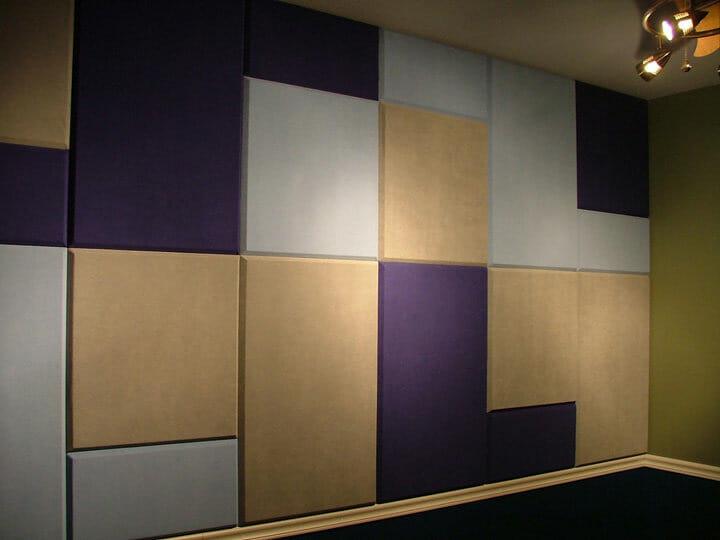
The Evolution of Acoustic Materials: From Foam to Modern Innovations
The story of acoustic material innovation is really the story of how our expectations for sound control have matured. What started as a purely functional effort to reduce echo and block noise has become a layered discipline that blends performance, aesthetics, sustainability, and integration. Today’s designers and builders are no longer asking, “How do we control sound?” They’re asking, “How do we control sound without compromising the space?”
That shift has driven the development of modern acoustic materials that look better, perform more precisely, and adapt to a wider range of environments – from open offices and restaurants to home theaters and home studio acoustic materials. Understanding this progression explains why today’s solutions perform differently than the foam panels that once dominated the market.
Why the Evolution of Acoustic Materials Matters
Acoustic expectations have expanded across nearly every type of space. Offices prioritize speech privacy and focus, while restaurants aim for energy without overwhelming noise. Homes now include media rooms, remote work setups, and multipurpose spaces, and commercial environments demand both performance and visual cohesion.
This evolution has pushed acoustic design trends toward solutions that do more than absorb sound. Today’s architectural acoustic products must balance:
- Performance across a wider frequency range
- Visual integration with interior design
- Durability in high-traffic environments
- Sustainability and material transparency
- Flexible installation across walls, ceilings, and structural systems
In short, acoustics is no longer an afterthought. It’s a design layer.
Early Approaches to Sound Control
Before engineered products became widely available, sound control relied on mass and softness. Heavy drapery, thick carpets, upholstered furniture, and dense construction were the primary tools. These methods worked – sometimes – but they were inconsistent and often impractical.
The rise of early absorptive products marked the first real step toward standardized acoustic treatment materials. Among these, foam quickly became the most recognizable.
The appeal of acoustic foam
Foam earned its place because it solved several problems at once. It was lightweight, relatively inexpensive, and easy to install. For DIY users, musicians, and small studios, it offered immediate, audible results.
It also became synonymous with acoustics. The wedge and pyramid patterns weren’t just functional – they signaled that a space was “treated.” For many years, foam defined the baseline for soundproofing material history in modern interiors.
Where traditional materials fell short
Despite its accessibility, foam had limitations that became more obvious as expectations grew.
- It primarily addressed mid and high frequencies, leaving low-end issues unresolved
- It lacked durability in commercial environments
- It offered minimal design flexibility
- It often clashed with finished architectural spaces
As projects became more complex – offices, hospitality, multi-use environments – these shortcomings pushed the industry toward more refined solutions.
The Shift from Basic Treatment to Engineered Acoustic Performance
The next phase of acoustic material innovation came from a deeper understanding of how sound behaves in real environments. Instead of relying on a single product type, designers began using multiple categories of engineered acoustic solutions, each serving a specific purpose.
Better understanding of sound absorption versus sound isolation
One of the most important distinctions to emerge was the difference between controlling sound within a room and preventing sound from leaving it.
Absorption reduces echo and improves clarity. Isolation blocks sound transmission between spaces.
If you want a deeper breakdown, this guide on sound isolation vs sound absorption explains the distinction clearly.
This distinction drove the development of specialized sound isolation materials alongside absorptive products.
The rise of specialized treatment categories
Instead of one-size-fits-all solutions, the market expanded into distinct product types:
- Absorbers for echo control
- Bass traps for low-frequency management
- Diffusers for spatial balance
- Barriers for sound blocking
- Curtains and partitions for flexible environments
- Isolation hardware for structural decoupling
This shift marked the beginning of modern next generation soundproofing, where performance is built through systems – not single products.
Major Acoustic Material Innovations Shaping Modern Spaces
The most visible progress in commercial acoustic innovations has come from materials that combine performance with design flexibility.
PET felt and recycled-content panels
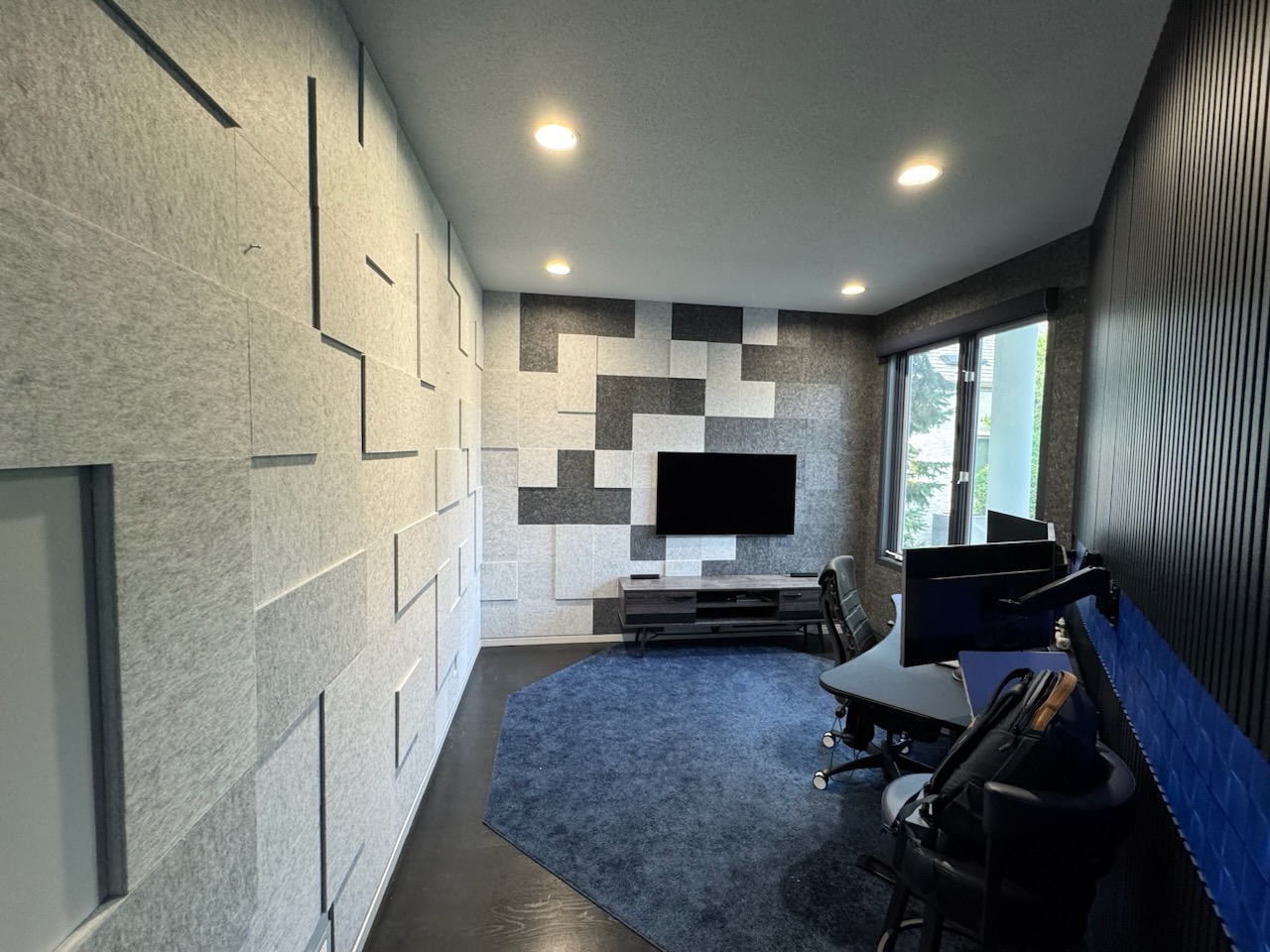
PET felt acoustic panels represent one of the most significant shifts in recent years. Made from recycled plastics, they offer a clean, consistent appearance with strong absorptive performance.
Beyond sustainability, PET felt introduced:
- Precise CNC-cut patterns
- Integrated wall and ceiling acoustic systems
- A wide range of colors and thicknesses
- Lightweight installation options
These panels helped redefine what acoustic foam alternatives could look like – moving from purely functional to design-forward.
Wood wool and natural texture systems
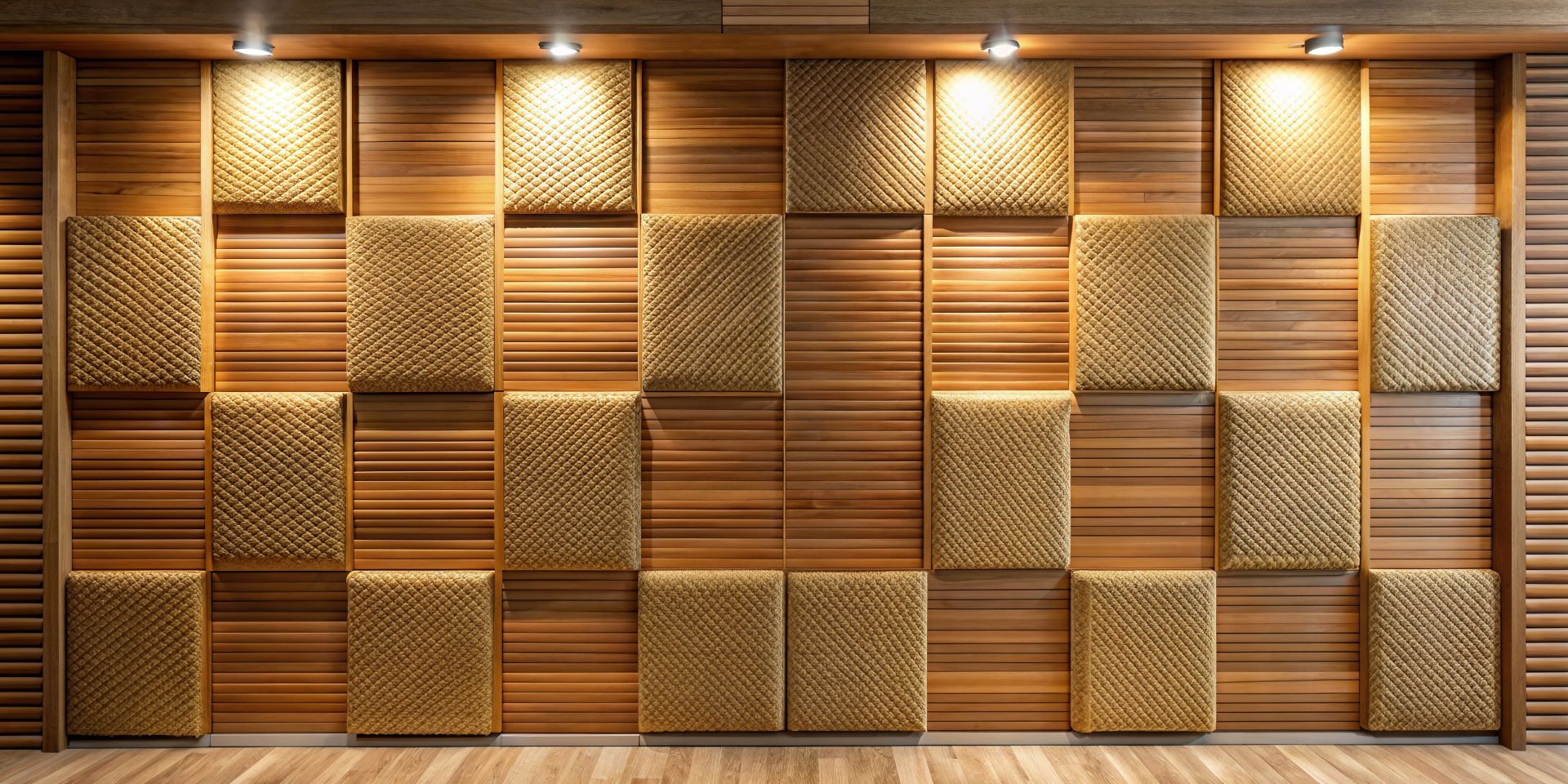
Wood wool acoustic systems brought a different kind of innovation: texture and warmth. By combining wood fibers with cementitious binders, these panels offer durability and a natural aesthetic that works well in architectural spaces.
They are especially effective in:
- Schools and institutional buildings
- Restaurants and hospitality environments
- Large open commercial interiors
This category bridged the gap between performance and material authenticity, reinforcing the role of acoustics in architectural expression.
Diffusion and shaped surface design
Another major leap came from acoustic diffuser innovations. Instead of absorbing sound, diffusers scatter it, preserving energy while reducing harsh reflections.
Modern diffusers rely on geometry – angled surfaces, curved forms, and calculated patterns – to manage sound distribution. This approach is especially important in:
- Recording studios
- Performance spaces
- High-end residential theaters
It marked a shift away from flat, uniform surfaces toward more dynamic acoustic environments.
Decorative acoustic systems
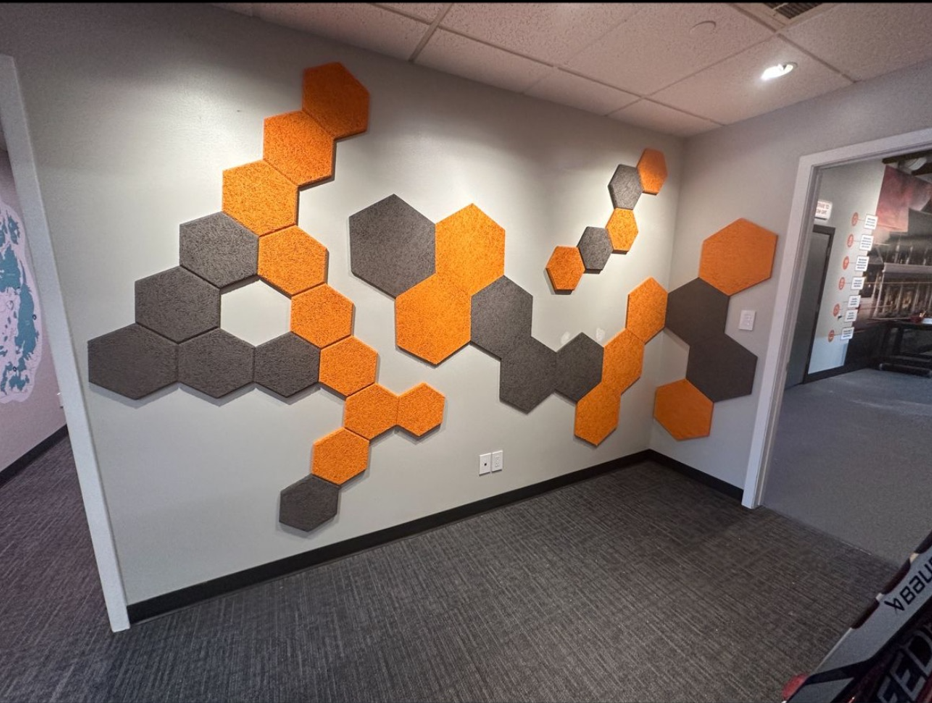
Perhaps the most visible change in the industry is the rise of decorative acoustic panels. These systems treat acoustics as part of the visual design, not as something to hide.
Examples include:
- Fabric-wrapped wall systems
- Printed acoustic art panels
- Slatted wood designs with integrated absorption
- Stretch-wall and ceiling systems
These solutions allow designers to align acoustics with branding, aesthetics, and spatial identity – something early materials could never achieve.
See More: Acoustic Panel Installation Guide [VIDEO]
Innovation in Isolation Materials and Assemblies
While visible panels get most of the attention, some of the most impactful advances have happened behind the scenes.
Mass and decoupling solutions
Products like mass loaded vinyl (MLV), isolation clips, and resilient channel systems have transformed how we approach soundproofing, particularly in common mass loaded vinyl applications like wall assemblies, ceilings, and mechanical enclosures.
These innovations improve performance by:
- Adding mass to block airborne sound
- Decoupling surfaces to reduce vibration transfer
- Minimizing structural connections that carry noise
They are essential components of modern vibration isolation products and high-performance assemblies.
Floors, ceilings, windows, and doors
Innovation has expanded beyond walls into complete building systems.
- Floating floors reduce impact noise
- Advanced ceiling acoustic systems improve multi-level isolation
- Acoustic-rated windows and doors enhance privacy
- Sealing systems eliminate flanking paths
This holistic approach reflects the evolution from simple treatments to fully integrated sound isolation materials.

How Acoustic Innovations Changed Design Priorities
As materials improved, expectations didn’t just rise – they shifted direction. Performance is still the baseline, but it’s no longer the differentiator. What matters now is how well acoustic solutions integrate into the broader design and function of a space.
That means acoustics is being considered earlier in the process. Instead of reacting to noise issues after occupancy, designers are planning for them during layout, material selection, and even structural decisions. That shift alone has had a bigger impact than any single product category.
There’s also less tolerance for visual compromise. Exposed foam and mismatched panels were once accepted as part of “doing acoustics.” That’s no longer the case in most commercial or residential environments. Today’s architectural acoustic products are expected to align with the design language of the space – whether that’s minimal, textured, branded, or highly customized.
This has pushed manufacturers toward more flexible systems. Color consistency, repeatable patterns, and integration with lighting or millwork are now part of the conversation. As a result, modern room acoustics is less about adding treatment and more about embedding it.
At the same time, performance expectations have become more specific. Clients are asking for speech clarity, privacy, or noise reduction in defined ways, not just “less echo.” That level of specificity is what continues to drive commercial acoustic innovations forward – it forces solutions to be more targeted, measurable, and reliable.
Choosing the Right Modern Acoustic Material for the Job
One of the most common mistakes in acoustics is trying to solve every issue with a single product. It’s understandable – many materials are marketed as all-in-one fixes – but in reality, acoustic problems are more specific than that.
The better approach is to match the material to the problem, starting with whether you’re dealing with reflections, sound transfer, or a combination of both.
Best options for echo control
If a room feels loud or harsh, or conversations are difficult to understand, the issue is almost always reflection. In these cases, absorptive acoustic treatment materials are the first step.
Most spaces benefit from a combination of:
- Wall-mounted panels at primary reflection points
- Direct-mounted ceiling acoustic systems to control vertical reflections
- Felt-based or fabric-wrapped systems for broader surface coverage
These solutions form the foundation of effective advanced sound absorption materials. When placed correctly, they handle the majority of echo-related issues without overcomplicating the design.
Best options for sound isolation
When the goal is to keep sound from moving between spaces, the strategy changes entirely. Surface treatments won’t solve the problem because the issue is structural.
This is where sound isolation materials come into play, typically built around a layered approach:
- Added mass, often through products like MLV
- Decoupling systems that limit vibration transfer
- Sealing details at doors, windows, and penetrations
Each piece affects overall performance. If one is missing or poorly installed, the system underperforms. That’s why isolation is less about individual products and more about how they’re assembled.
See More: Door Seal Kit Installation Guide [VIDEO]
Best options for full-room performance
In more complex environments – offices, studios, or multi-use spaces – acoustic issues rarely fall into a single category. These rooms often need clarity, balance, and separation at the same time.
A combined approach is usually the most effective:
- Absorption to control reflections and improve intelligibility
- Diffusion to maintain energy and avoid over-deadening the space
- Isolation where privacy or containment is required
Engineered acoustic solutions stand out in these environments. Instead of relying on a single material, you’re building a system where each component serves a defined role, and the overall result is more predictable.
What the Future of Acoustic Materials May Look Like
Looking ahead, acoustic material innovation is less about introducing entirely new categories and more about refining how materials perform, integrate, and adapt.
Sustainability is still a major driver, but the focus is shifting toward durability and long-term use. Materials that maintain performance over time – and don’t require frequent replacement – are becoming more valuable, especially in commercial environments.
Customization is also evolving. Instead of fully bespoke solutions, manufacturers are developing systems that allow variation within a defined framework. That makes them easier to specify, scale, and install without losing design flexibility.
Integration is where the most meaningful change is happening. Acoustic systems are increasingly built into walls and ceilings from the beginning, rather than added after the fact. That shift leads to cleaner outcomes and fewer compromises between performance and appearance.
Key trends shaping the direction:
- Modular systems that can be reconfigured as spaces change
- Acoustic elements integrated into architectural features
- Greater alignment between acoustic performance and visual consistency
The result is a move toward systems that feel less like add-ons and more like part of the building itself.
Problem-to-Product Matrix
- ✅ = great / good solution
- 🟨 = okay / neutral solution
- ❌ = poor / not recommended
| Problem | Absorbers | Diffusers | Barriers | Isolation Hardware |
Sealing Systems |
| Echo | ✅ | ✅ | ❌ | ❌ | ❌ |
| Bass Buildup | ✅ | 🟨 | ❌ | ❌ | ❌ |
| Vibration | ❌ | ❌ | ❌ | ✅ | 🟨 |
| Airborne Noise | 🟨 | 🟨 | ✅ | ✅ | ✅ |
| Privacy | ✅ | 🟨 | ✅ | ✅ | ✅ |
Final Thoughts on Acoustic Material Innovations
The shift from foam-based treatments to today’s systems reflects a broader change in how acoustics is approached. What used to be reactive – fixing problems after they appeared – is now increasingly planned and integrated.
Modern acoustic treatment materials are expected to do more. They need to perform reliably, align with the design of the space, and adapt to how that space is actually used. That’s why products like PET felt acoustic panels, wood wool acoustic systems, and newer diffusion-based designs have gained traction – they solve problems without introducing new limitations.
For project teams, the takeaway is practical. The earlier acoustics is addressed, the more control you have over both performance and appearance. Waiting until the end narrows your options and often leads to compromises that could have been avoided.
Acoustic Geometry’s role is to support that process with both proven and forward-looking solutions – products that work on their own, but perform best as part of a system. Because at this stage in the industry, effective acoustic material innovation isn’t about a single product – it’s about combining the right materials in the right way to match how a space is built and used.


About author












Add comment
You must be logged in to post a comment.