

Home Acoustics Tips for Large House with Big Families
Big homes are supposed to feel spacious and comfortable – but acoustically, they don’t always behave that way. High ceilings, open layouts, and hard surfaces can turn everyday activity into a constant hum of noise, echo, and distraction – and over time, it can be exhausting. If you’ve ever struggled to hear someone across the kitchen, taken a work call while dishes clatter in the background, or noticed how sound seems to travel from one end of the house to the other, you’re already dealing with the realities of home acoustics in large spaces.
The good news is that better sound doesn’t require a complete redesign. With a few smart layout decisions and targeted fixes, you can reduce echo, improve clarity, and create a more comfortable environment for both work and family life. This guide walks through how to approach large house acoustics room by room – especially if you’re balancing busy family routines with work-from-home needs.
Start With the Two Types of Sound Problems
Before making changes, it’s important to understand one core concept: not all sound issues are the same. Many homeowners try to solve everything with one solution, but acoustic treatment vs soundproofing serve very different purposes.
- Acoustic treatment reduces echo and reverberation within a room. This improves clarity, comfort, and conversation quality.
- Soundproofing (isolation) reduces sound traveling between rooms. This helps with privacy and focus.
If your living room feels “boomy,” that’s a treatment issue. If your home office picks up noise from the kitchen, that’s an isolation issue.
Quick Self-Diagnosis
Here’s a simple way to identify the problem you’re facing:
- You hear echo, harshness, or muddled speech → Focus on acoustic treatment
- You hear noise from other rooms clearly → Focus on sound isolation
- You hear both → You likely need a combination of both approaches
Getting this distinction right is the foundation of any effective room acoustic treatment guide.
For a more detailed breakdown, use this quick reference to match what you’re hearing with the right type of solution:
| Problem | What You’re Hearing | Best Fix Category | Best First Move |
| Echo or harsh sound in a room | Voices sound loud but unclear, with a “bounce” or ring | Acoustic treatment | Add rugs, curtains, and wall/ceiling panels to absorb reflections |
| Noise from other rooms | Conversations, TV, or activity clearly heard through walls or doors | Soundproofing (isolation) | Seal door gaps, upgrade to solid-core doors, add weatherstripping |
| Hard to follow conversations | Speech feels muddled, especially with multiple people talking | Acoustic treatment | Add absorption near conversation areas to improve clarity |
| Distractions during work or calls | Background noise interrupts focus or gets picked up on calls | Combination of both | Seal the room first, then add interior absorption for clarity |
Design the House Like a “Sound Zoning” Map
In large houses, noise isn’t just about materials – it’s about how spaces connect. One of the most effective strategies in noise reduction for big families is to think of your home as a series of acoustic zones.
Group your rooms based on activity level:
- Loud zones: kitchen, living room, play areas, media rooms
- Quiet zones: bedrooms, home offices, reading spaces
- Buffer zones: closets, bathrooms, laundry rooms
This concept – often called an acoustic zoning floor plan – helps prevent many sound conflicts before they start. In most large homes, this one shift – grouping spaces by how loud they actually are – solves more problems than any single product ever will.
Traffic Flow is an Acoustic Decision
Hallways, staircases, and open sightlines act like sound highways. If your home office door opens directly into a busy kitchen walkway, no amount of interior treatment will fully solve the problem.
To stop sound traveling through hallway areas:
- Break up long, uninterrupted paths with doors or soft surfaces
- Try to designate quiet rooms away from high-traffic corridors
- Use buffer rooms wherever possible
Small layout adjustments can dramatically improve large house acoustics without adding much cost.
Read More: Soundproofing Tips for Tiny Home Builders
Fix Echo First in Big, Open Rooms
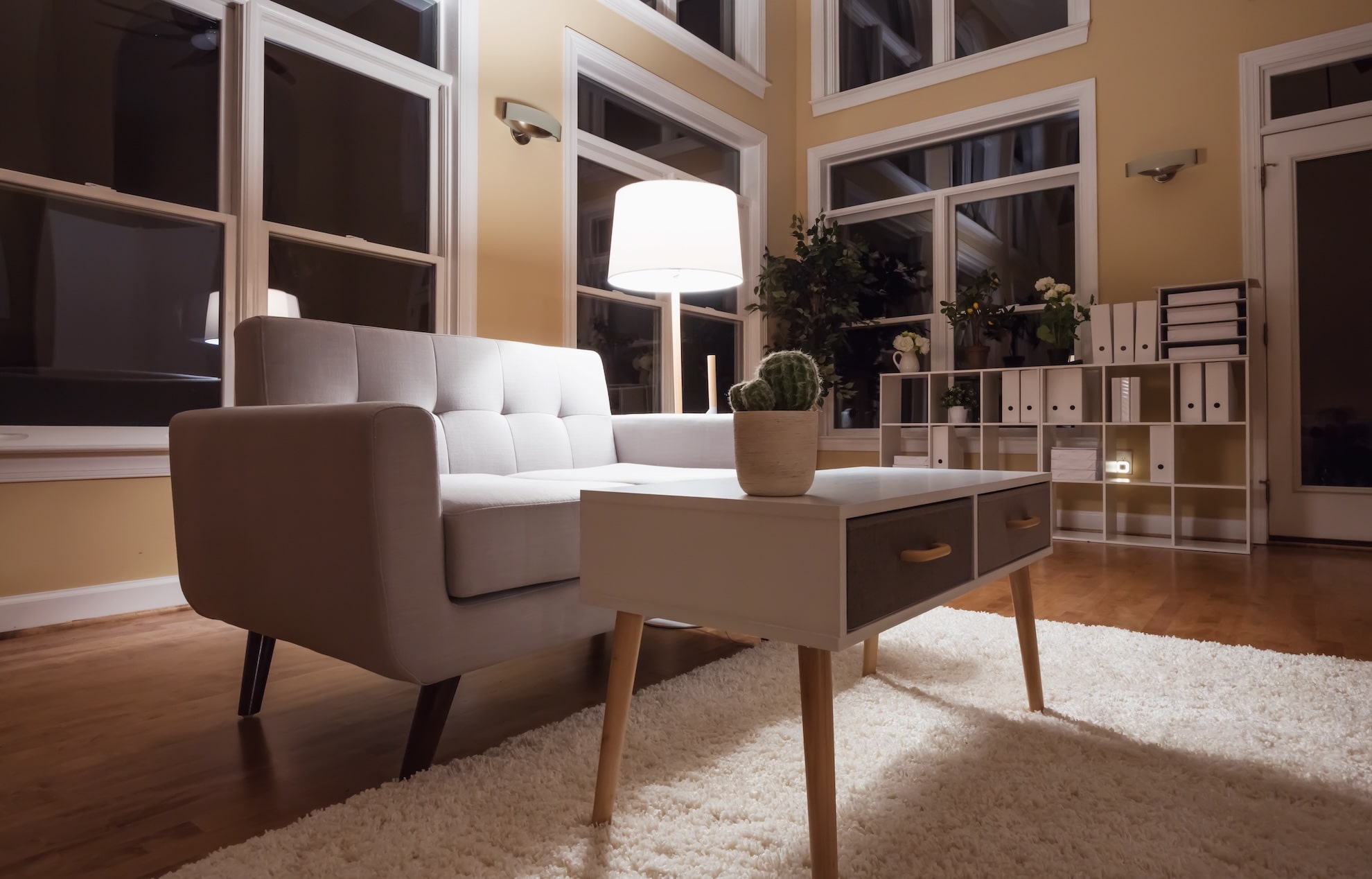
Open layouts are one of the biggest contributors to poor home acoustics in modern homes. Without walls to contain sound, voices and everyday noise spread freely and reflect across large surfaces. That’s why home acoustics for open floor plan layouts often feel louder and less clear at the same time.
Open layouts don’t just increase volume – they reduce control. In large, connected spaces, sound reflections overlap and arrive at your ears at slightly different times. The result is that “busy” feeling, where everything blends together and conversations can be a struggle.
This is where open concept echo reduction becomes a priority. When you reduce reverberation, you’re not just lowering noise – you’re improving how sound behaves in the room. Voices become clearer, the TV volume can come down, and the entire space feels more comfortable to be in.

The Big 4 Absorbers
The most effective way to improve these spaces is by adding absorption across the largest reflective surfaces. The goal isn’t to decorate – it’s to meaningfully reduce how much sound is bouncing around the room.
To reduce echo in living rooms and similar areas, focus on:
- Rugs with thick padding
- Thick curtains or drapery over large windows
- Upholstered furniture
- Acoustic panels for walls or ceilings
The key is coverage. In large rooms, small decorative pieces won’t move the needle. You need enough soft surface area to absorb sound energy at scale, especially in the areas where people gather and talk.
Ceiling Treatments
In big rooms, ceilings are often the largest untreated surface. Treating it usually makes an immediate difference. Adding direct-mounted ceiling panels above seating or conversation areas reduces harsh reflections and improves comfort almost immediately.
This approach is especially effective when working with high ceilings or family room echo solutions, where multiple people may be talking, watching TV, or playing at once.
Build a Quieter Home Office for Remote Work
With remote and hybrid work now standard, home office acoustics have become a big priority. In busy households, that means both clarity and separation from noise are needed.
Start with location. If you can control it, try to make sure your office is:
- Away from the kitchen and living areas
- Positioned behind buffer zones
- Not directly connected to high-traffic paths
Upgrade the door first (cheap + high impact)
If you only make one improvement, make it this one. A properly sealed door can dramatically improve work from home noise reduction efforts.
To create a more soundproof home office door:
- Add a door seal kit with gaskets or weatherstripping to seal gaps
- Install an automatic bottom seal to close the gap at the bottom of the door
- Use a solid-core door if possible
These simple upgrades reduce sound leakage far more than most homeowners expect.
Reduce “voice leakage” the right way
For privacy, focus on isolation:
- Add mass (heavier doors or walls where possible)
- Seal air gaps
For clarity inside the office:
- Add acoustic panels for home use on the walls behind and beside your desk
- Use soft furnishings to reduce echo
This combination is one of the most effective ways to improve speech intelligibility in home offices, especially during video calls.
Video-call sound: what matters most?
Your microphone hears what’s closest to it. That means:
- Sit relatively close to your mic
- Place soft materials behind you to reduce reflections
- Avoid large, reflective surfaces directly in front of you
These small adjustments often outperform expensive equipment upgrades.
Kitchen Acoustics for Big Families
Kitchens are usually the loudest room in the house – and in open layouts, that noise spreads everywhere. Figuring out how to reduce kitchen noise in open plan spaces requires a mix of absorption and smart material choices.
Hard surfaces like tile, stone, and glass reflect sound – which is why kitchens tend to feel louder than they actually are, especially once multiple people are talking, moving, and using appliances at the same time.
To manage this, focus on adding absorption where it fits naturally into the space. Runners or rugs in walkways help reduce footstep noise, upholstered seating softens conversation areas, and ceiling-mounted panels over dining areas can make a noticeable difference – especially when chosen with finishes that are easy to clean and maintain.
Appliances and vibration (the hidden noise)
Some noise isn’t airborne – it’s structural. Vibrations from dishwashers, refrigerators, or blenders can travel through cabinetry and flooring.
Simple fixes include:
- Anti-vibration pads under appliances
- Choosing quieter models when upgrading
- Ensuring proper installation and leveling
These steps help reduce overall noise without changing the look of your kitchen.
Bedrooms: Privacy + Better Sleep
Bedrooms should feel like an escape from the rest of the house – but in big homes, sound often travels farther than expected. Applying practical bedroom soundproofing tips can make a noticeable difference.
Focus on common weak points:
- Shared walls between bedrooms or living spaces
- Doors with gaps
- Windows with insufficient sealing
Using closets as buffers – placing them between noisy and quiet spaces – can also improve isolation.
Soft materials like acoustic rugs and curtains help reduce internal noise while also improving comfort. While they won’t fully block sound, they contribute to a calmer environment.
Hallways, Stairwells, and Tall Ceilings
These areas are often overlooked, but they play a major role in how sound moves through a house. Without treatment, they can amplify and carry noise between floors and rooms.
Tall, open spaces benefit most from absorption placed strategically – not just at ear level, but higher where reflections occur. In stairwells especially, sound tends to rise and bounce between surfaces, which is why treatment needs to follow that same path. Effective stairwell echo treatment should include adding acoustic panels higher on the walls, using decorative sound-absorbing art, and treating adjacent ceiling areas where possible.
Room-by-Room Starter Plan (What to Do First)
If you’re not sure where to begin, prioritize improvements in this order:
- Fix the echo in the largest open space
- Seal the home office (door and gaps)
- Add targeted absorption in office and living areas
- Improve bedroom privacy
- Address hallways and stairwells
Making improvements in this order tackles the highest impact areas first, making your efforts more efficient and noticeable.
When You’re Building or Remodeling: “Acoustics-First” Choices
If you’re planning on a renovation or new build, this is your opportunity to solve problems at the source. Focus on:
- Layout zoning with buffers between loud and quiet spaces
- Wall assemblies that include insulation or additional layers
- Solid-core doors with proper seals
- Flooring underlayment to reduce impact noise
These decisions don’t need to be overly technical to be effective. Even small upgrades, when planned early, can significantly improve long-term comfort.
Get a Whole-Home Acoustic Plan
Every home is different, especially when balancing family life, open spaces, and work-from-home demands. A tailored plan allows you to prioritize the right solutions for your layout, rather than guessing or over-treating certain areas.
If you’re evaluating your own space, it helps to look at:
- Floor plans and room connections
- Where noise starts vs. where it becomes a problem
- Daily routines and activity overlap
From there, you can build a strategy that blends performance with aesthetics – using solutions like acoustic panels for home spaces that actually fit your design.
If you’re not sure where to start, sharing a floor plan, a few photos, and your biggest problem areas with us can quickly point you in the right direction. A focused plan helps you solve the right problems first – without over-treating or guessing.
Ultimately, improving home acoustics isn’t about eliminating sound entirely. It’s about shaping it – so conversations are clearer, work is more focused, and the energy of a busy home feels controlled instead of overwhelming.


About author













Add comment
You must be logged in to post a comment.