

Acoustic Testing Methods, Tools, and Standards: A Deep Dive for Technical Users (Part 2)
This article is part two in our series on acoustic testing and measurements. In Part One: Acoustic Testing Basics: What It Is, Why It Matters, and How to Get Started, we introduced sound measurement, decibels, and the physics of acoustic testing. In this part two, we’ll discuss the methods, equipment, and international standards which underpin the professional practice.
If you’re an audio engineer, building scientist, industrial hygienist, or compliance officer, you can get a lot more for your testing dollar by understanding not only what’s being tested, but how it’s tested and how the results are interpreted. To generate reliable test results, acoustic professionals must follow ISO standards, ANSI acoustic standards, and ASTM guidelines to ensure compliance.
Acoustic Testing Methods
There are several different tests that acoustic professionals use to define how sound is transmitted and reverberates throughout a space or structure. Each type of test is used for different scenarios. For example, certain tests may be used for reverberation testing, transmission loss testing, or environmental noise testing. The most frequently used acoustic testing methods are as follows.
Reverberation Time (RT60)
Reverberation time (RT60) is the time taken for the sound to decay by 60 dB. Reverberation time management and testing is a crucial acoustical parameter in concert halls, classrooms, and auditoriums where speech intelligibility or music clarity is a concern.
- Formula: Sabine’s Equation
RT60 = 0.161 (V/A)
where V = room volume (m³) and A = total sound absorption (m²)
- Standards: ISO 3382: Procedure for RT60 measurements
Sound Transmission Loss
Sound transmission loss (STL) testing is performed to determine the amount of sound loss that occurs as sound travels through a partition (wall, floor, ceiling). ASTM E90 is one of the most common sound transmission loss tests used in laboratory conditions. The test results are reported as STC (Sound Transmission Class) ratings.
Frequency Spectrum Analysis
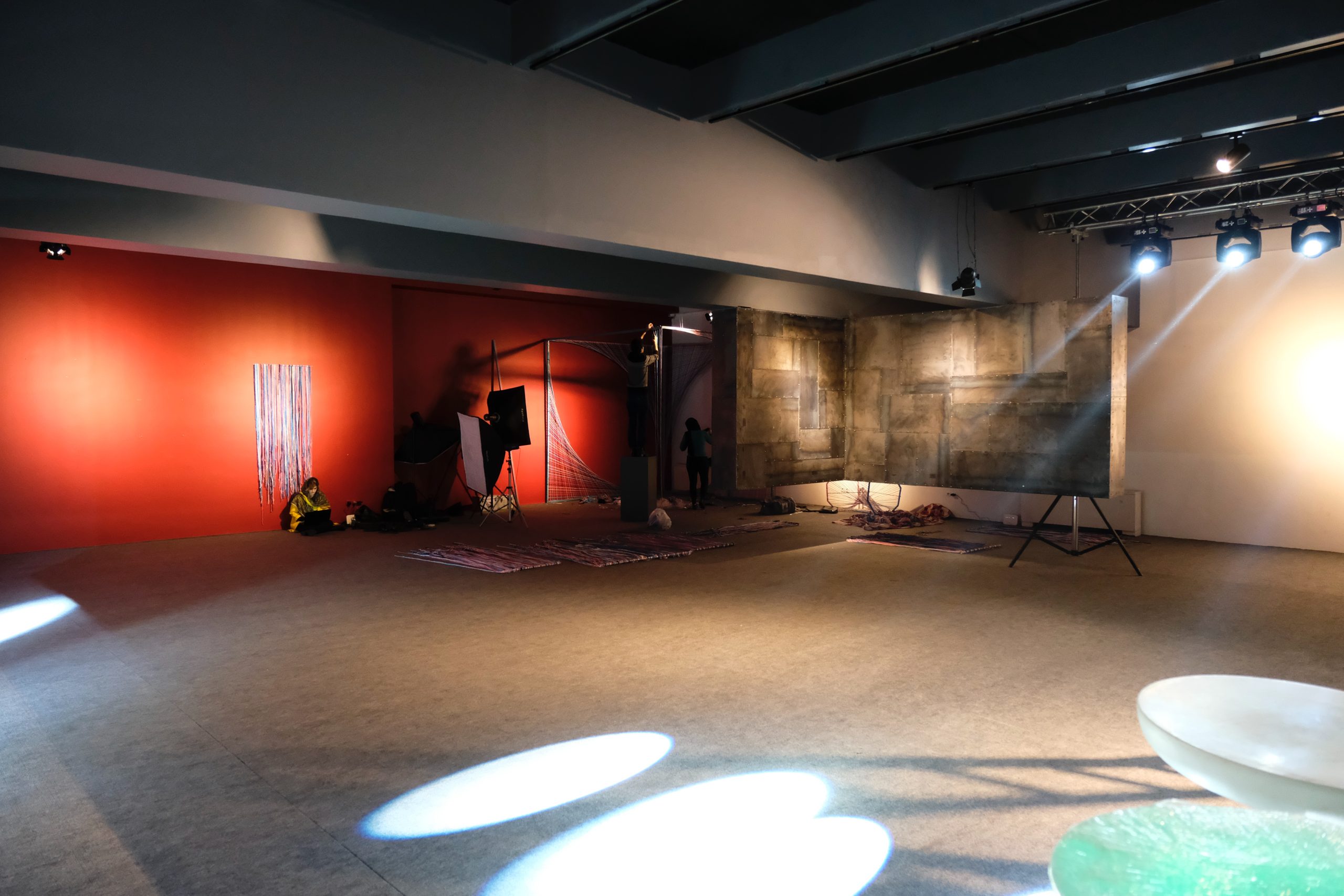
Frequency spectrum analysis is the analysis of the relative contribution to a sound at different frequencies. 1/3-octave bands or FFT (Fast Fourier Transform) are often used by acoustic engineers to locate problem resonances, low frequency energy buildups, or tonal noise coming from a piece of mechanical equipment. It’s most useful in identifying tonal problems in HVAC systems or room tuning in studio control rooms.
Environmental Noise Monitoring
Environmental noise control testing and measurements assess how noise from an industrial site, airport, or roadway affects communities. Along with decibel testing and weighted filters (A, C, and Z), noise engineers monitor local or state compliance and create environmental noise reports used for urban planning or noise compliance testing.
Equipment Used in Acoustic Testing
Professional grade equipment is necessary to capture repeatable data. Key pieces of equipment include:
Measurement Microphones
Measurement microphones are high-precision microphones that are used to record the sound. There are two types:
- Class 1 microphones: High accuracy microphones with a wide frequency response (IEC 61672 compliant). Most commonly used in laboratory testing for certification/compliance testing.
- Class 2 microphones: Lower-cost, less accurate, and have a slightly reduced frequency range. Used for field surveys and non-certification applications.

Sound Level Meters
Sound level meters (SLMs) are used to measure sound pressure level (SPL) in decibels.
Weighting scales include:
- A-weighting: Approximates the sensitivity of human hearing (most common)
- C-weighting: Measures a broad range including low frequency noise
- Z-weighting: Flat, unweighted response
Acoustic Cameras
An acoustic camera uses microphone arrays and image processing software to map sound. By applying beamforming algorithms, noise engineers can “visualize” noise hotspots. Acoustic cameras are used most commonly for vibrational noise testing in the automotive, aerospace, and industrial machinery industries.
Acoustic Analysis Software
Acoustic analysis software is used to interpret measurements as well as simulate designs. Below is a comparison of two commonly used software solutions for acoustic testing.
| Software | Primary Use | User Type | Key Features | Cost |
| Brüel & Kjær (B&K) Software | Professional acoustic analysis, noise/vibration measurement | Acoustic engineers, testing labs, researchers | Advanced data acquisition, real-time analysis, compliance with ISO/ANSI standards, integration with B&K hardware | $$$$ (Enterprise-level, license-based) |
| Room EQ Wizard (REW) | Room acoustics measurement & optimization | Audio enthusiasts, home studios, small businesses | Frequency response measurement, RT60, SPL, EQ calibration, compatible with standard USB mics | Free (donation-supported) |
Acoustic Testing Standards and Protocols
To have value, an acoustic test must be completed to a known standard or set of guidelines. Adhering to international and national standards helps to ensure repeatability and accuracy in a test. Some of the most significant standards and protocols for professional acoustic testing are:
ISO and ANSI Standards
- ISO 3382: Measuring reverberation time (RT60) in performance spaces
- ISO 140 series: Building acoustics test protocols including partitions, floors, façades, and envelopes
- ANSI S12.2: Recommended criteria for acceptable indoor background noise levels
ISO and ANSI standards are the most commonly used for architectural design guidance as well as mechanical engineering specifications, while building officials use them to set regulatory agency acoustical requirements and perform code compliance testing.
ASTM Standards
- ASTM E90: Laboratory measurement of STL for walls and partitions
- ASTM E413: Procedure for calculating STC rating from STL test curve
Construction firms, testing labs, and manufacturers use ASTM standards for testing to verify building code and product certifications.
Acoustic Testing Workflow
A professional acoustic test is a process. As with any testing, defining the objective and preparing the environment is critical.
1. Define Objective
The first step in a test is always to clarify the problem statement. Is the goal to reduce HVAC noise, improve classroom clarity, or prove code compliance?
2. Prepare the Space
Preparation of the space may include shutting off HVAC, sealing doors, or using a test chamber to control for external influences. In some cases, controlled test chamber setup is required to eliminate external noise variables and achieve repeatable laboratory-grade results. Microphones should be positioned away from boundaries to avoid reflections.
3. Conduct Measurements
Accurate sound pressure level measurement is the cornerstone of most acoustic tests, requiring calibrated microphones and weighting filters to ensure valid readings. Before taking measurements, instruments must be calibrated against a known reference tone. SPL readings must account for background noise and environmental conditions during testing.
4. Analyze Data
After readings have been taken, acoustic modeling and statistical averaging convert data points into meaningful results. Reports may include reverberation time, sound absorption coefficient measurement, sound transmission class (STC)/noise reduction coefficient (NRC), etc.

Acoustic Test Results Interpretation
A testing protocol only goes as far as the people who need to understand the data. Interpreting test results is as important as doing the test itself. Ultimately, every test contributes to a broader acoustic performance evaluation, helping engineers confirm whether a space or product meets its intended function and compliance requirements.
- STC and NRC ratings: STC is a rating that is used to measure how well a partition can block airborne sound. NRC is a surface’s mean absorption coefficient at speech frequencies. See this NRC reference guide for more information.
- Frequency dips and peaks: Spikes or dips in a room’s response often highlight resonance or isolation at a particular frequency.
- Reverberation vs. clarity: Longer RT60 times could lead to a “muddy” sound in a room, and abnormally short RT60 times may hurt clarity and decrease music quality in a space.
- Noise compliance testing: Compliance testing makes sure an indoor space is within city or OSHA noise standards.
Final Thoughts
One of the most important distinctions in acoustic design is understanding sound isolation vs sound absorption. Sound isolation prevents sound from passing between spaces, while absorption reduces reflections within a room.
As you can see, the world of acoustic testing methods is a specialized and important one. From deciding between sound isolation versus sound absorption when specifying and designing buildings, to understanding the real-world acoustic performance of cars and airplanes, precision counts. In this article, we outlined the basics of acoustic testing and methods. We’d like to point out that Acoustic Geometry is a solution provider, not an accredited testing laboratory. If you require certified results, always work with qualified professionals who follow ISO, ANSI, and ASTM testing standards.
If you’re looking to improve the acoustic comfort and performance of your project, our team can help you choose the right materials and solutions based on reliable test results. Contact Acoustic Geometry to discuss your next project.
About author







Add comment
You must be logged in to post a comment.