
The Role of Bass Traps in Perfecting Low-End Sound in Home Theaters
Every home theater owner eventually discovers the same thing: no matter how good the speakers are or how expensive the subwoofers might be, the bass still misbehaves. In some seats there is too much bass, in others there is almost no low end at all, and voices sound muddy whenever the soundtrack swells. This is usually when people learn why dedicated home theater bass traps matter so much in small rooms – and why low-frequency acoustic treatment is the foundation of truly great home theater sound.
What is a bass trap?
A bass trap is a type of acoustical treatment that’s specially built to handle bass waves. Those low end vibrations are more difficult to handle than the rest of the spectrum, and most other types of acoustical treatments have a hard time taming them.
Below 200 Hz, bass stops acting like the rest of the audible spectrum. Instead of bouncing around the room in predictable ways, it piles up in corners, dips in the middle of the room, and forms intense standing waves that change dramatically from one seat to the next. This is the world of room modes in small rooms, where peaks and nulls are unavoidable, and where simple EQ cannot fix the underlying issues. The Schroeder frequency – the point where sound transitions from reflective behavior to modal behavior – tells the same story, and understanding the Schroeder frequency home theater relationship helps explain why bass behaves so differently. In most home theaters, it falls between 150 and 250 Hz, meaning nearly all the low-end energy is dominated by slow “pressure-based” behavior instead of fast-moving reflections.
The result is familiar: bass that feels bloated, smeared, or inconsistent. But with the right acoustic treatment, especially well-placed bass traps, that low end can become tight, controlled, and far more enjoyable.
Low End, Big Problem – Why Home Theaters Struggle Below 200 Hz
Small and mid-sized theaters are the perfect storm for low-frequency chaos. The dimensions of the room dictate where standing waves will form, and those waves reinforce some frequencies dramatically while wiping others out. Move your head a foot forward or backward and the bass may jump 10 to 20 dB. That’s why two people sitting next to each other can hear completely different sound.
Another challenge is low frequency decay time – how long bass energy lingers in the room. The classic “waterfall” graph shows this very clearly. In an untreated room, the bass doesn’t simply play and stop; it hangs around. Notes blur together, effects mask dialogue, and the overall experience feels swampy and slow.
These problems aren’t about equipment quality. They’re about physics. And until the room is brought under control, even the best subwoofers cannot deliver the precision they’re capable of.
What Bass Traps Actually Do and Don’t Do
A common misunderstanding is that bass traps “fix the frequency response.” They help, but the real magic happens in the time domain. Bass traps are most effective at reducing bass ringing and boomy sound, shortening decay times, and making the room stop resonating long after the audio signal ends.
Porous traps work on particle velocity – they absorb energy by slowing airflow inside materials like mineral wool or foam. Pressure-based traps, such as membrane bass absorber designs, use a thin diaphragm that flexes in response to pressure peaks. Each type behaves differently, which is why pressure vs velocity acoustics is a useful framework for understanding where to place each one.
Corners are pressure magnets, so adding absorption there is extremely effective. On the other hand, areas around one-quarter wavelength of the wall are excellent for velocity-based designs. Real-world products blend these behaviors to create practical, predictable performance.
It’s also worth saying: bass traps do not soundproof a room. They improve playback quality inside the room itself, not the transmission of sound to adjacent spaces.
Types of Bass Traps – Choosing the Right Tool
Broadband Porous Traps: Versatile and Effective
Broadband designs are the most common form of low-frequency treatment. When they’re built deep enough and placed correctly, they absorb across a wide range of bass frequencies. In corners – especially with corner bass trap placement where pressure is highest – they perform far better than thin wall panels.
Thickness and volume matter. Adding an air gap behind the trap helps it reach lower frequencies. In many theaters, these broadband modules handle the bulk of the modal activity, especially when paired with strategic placement along wall-ceiling edges.
Membrane / Diaphragmatic Traps: Targeted Tools for Tough Problems
Some rooms have one stubborn resonance that broadband treatment can’t reach. That’s where broadband vs tuned bass traps becomes a meaningful choice. Membrane traps are tuned to narrow, problematic bands – sometimes as low as 30 or 40 Hz – and can tame issues without taking up too much space. Their slim profile makes them ideal for small theaters where deep porous traps might not fit.
Soffit / Corner Modules and Modular Systems
When you want large-scale coverage without sacrificing floor area, soffit-style traps become extremely attractive. Soffit bass trap design uses the ceiling-wall junction as a continuous zone for absorption, smoothing multiple modal patterns at once. The trihedral ceiling-wall-wall junction is even better, which is why trihedral corner absorption products are so popular for home theaters.
Modular systems allow you to stack traps floor-to-ceiling without altering the room’s footprint – especially useful behind screens, behind seating, or along the rear corners where modes tend to cluster. In some dedicated theaters, even the seating platform becomes a riser bass trap, adding a hidden layer of low-frequency control.
How Much is Enough? Sizing Bass Traps to the Room
Every room has a certain amount of low-frequency energy it can store. The smaller the room, the more treatment it needs relative to its volume. Two to four large corner modules usually provide a meaningful improvement, but many rooms benefit from more. You’re not “covering a surface” so much as “adding enough absorption volume” to control low-end decay.
This is where measurement helps. A waterfall plot before and after treatment typically shows the change instantly: shorter decay tails, fewer resonant ridges, and cleaner separation between notes. But just as importantly, you’ll hear the difference. Bass becomes punchier and more even across the room.
There’s no single universal amount of trapping that fits every theater, but you’ll almost always benefit from treating the major corner zones first, then expanding coverage based on listening tests and measurements.
Where to Put Bass Traps in Order of Impact
Trihedral Corners: The Biggest Win
The intersection of three surfaces produces the highest bass pressure in the room. Treating these locations first – front and rear – yields extremely effective results without taking up too much space.
Wall-Ceiling Edges: Long Runs, Big Gains
Soffit runs along the ceiling edges help control modes that stretch across the length or width of the room. Because these runs are continuous, they behave like long bass “dampers” that smooth multiple frequencies at once.
Rear Wall Behind Seating
If your seating is close to the back wall, bass reflections from behind you can cause smearing and muddiness. Rear wall bass treatment helps tighten imaging and clean up dialogue clarity. Deep broadband traps or membrane-enhanced units in this area pay off quickly.
Front Wall Behind Screen or Subs
Placing traps behind an acoustically transparent screen or near subs helps deal with boundary interactions. This is a major step in achieving proper subwoofer integration with traps, especially when subs are close to the front wall.
Subs + Traps: The Winning Combo
Many people hear about multi-subwoofer arrays and assume they are the full solution. They do help create a smoother frequency response – multi-sub home theater systems are excellent at reducing peaks and nulls. But they don’t significantly reduce decay on their own.
That’s why combining subs with well-placed trapping produces dramatically better results. The general approach is simple and effective:
- Position subs for the smoothest modal response.
- Add traps in key pressure zones to shorten decay.
- Use EQ only after the room is controlled.
This is where quarter wavelength bass absorption concepts show up in practice. Once the room stops ringing, EQ and placement choices work far more effectively, which is the clearest example of acoustic treatment vs EQ – you must fix the room before electronic correction can do its job.
Performance Without the Studio Look
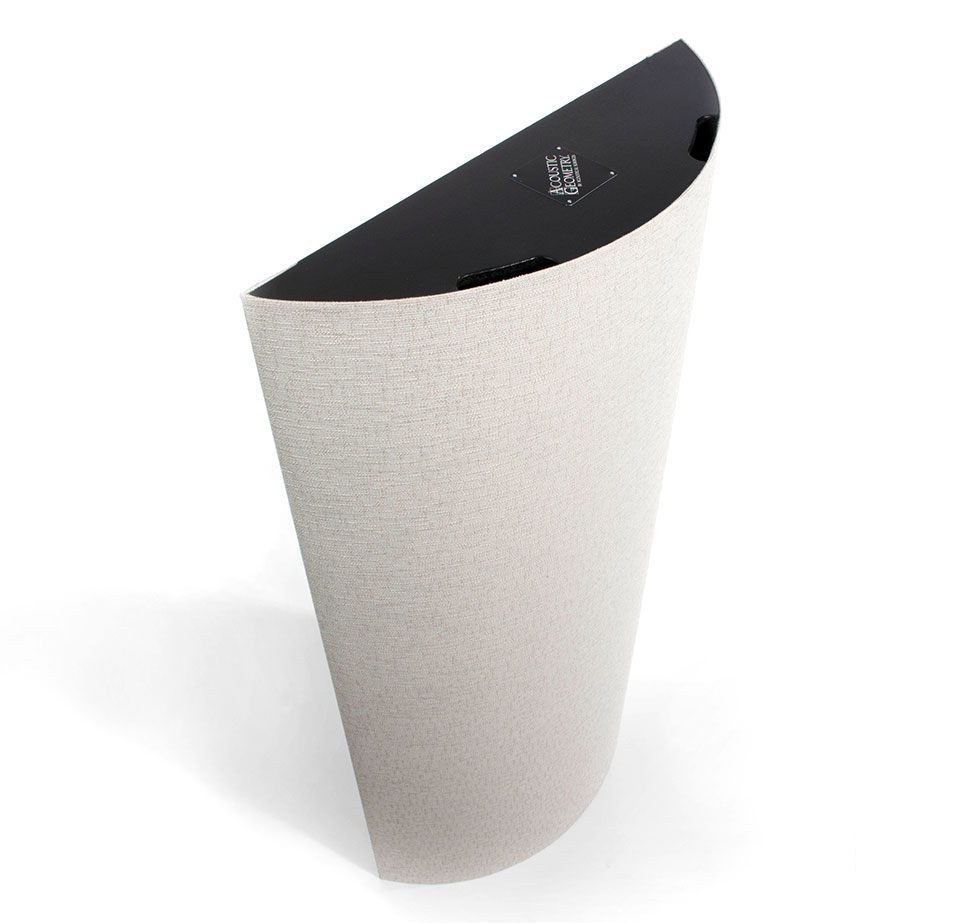
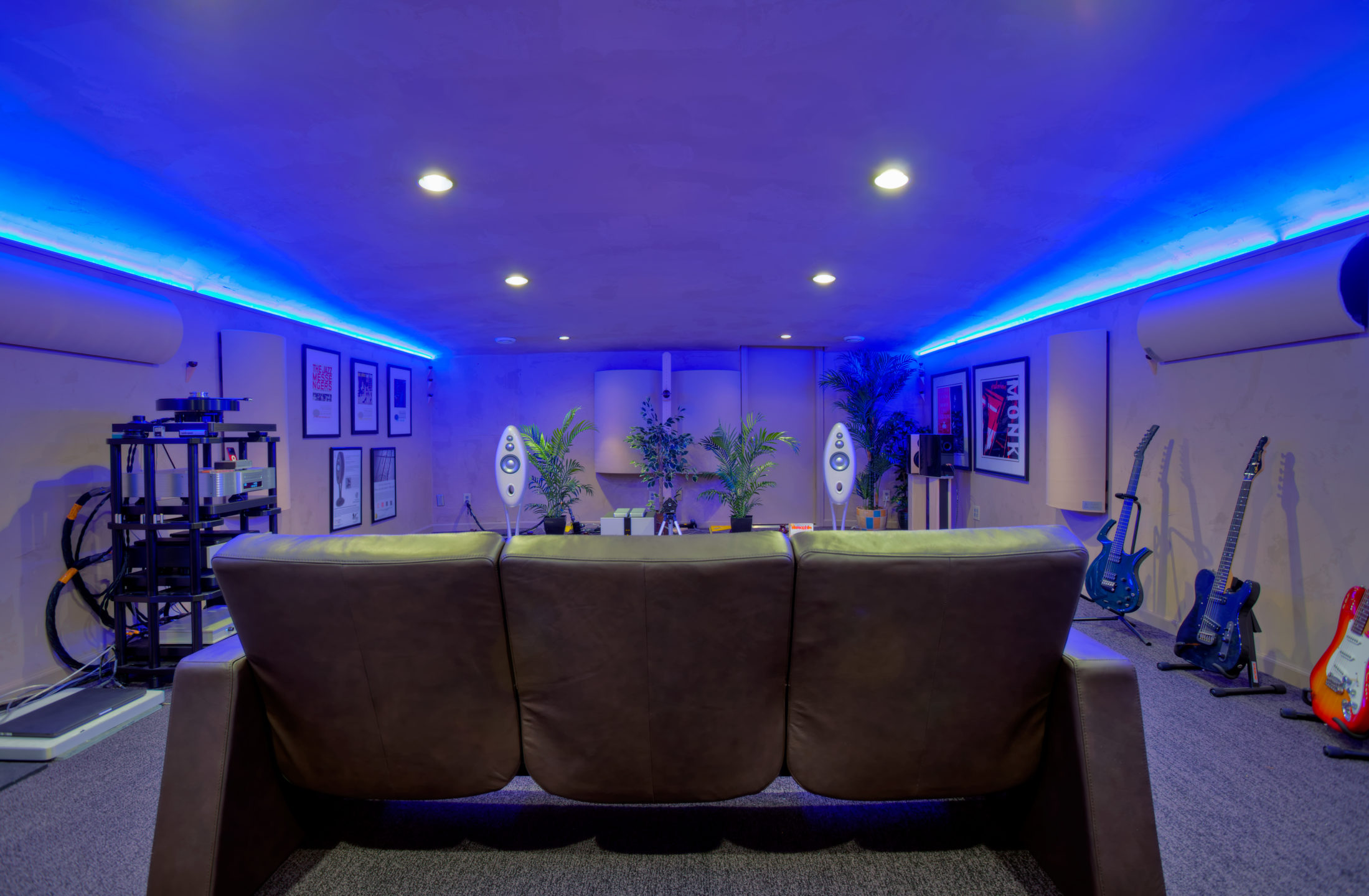
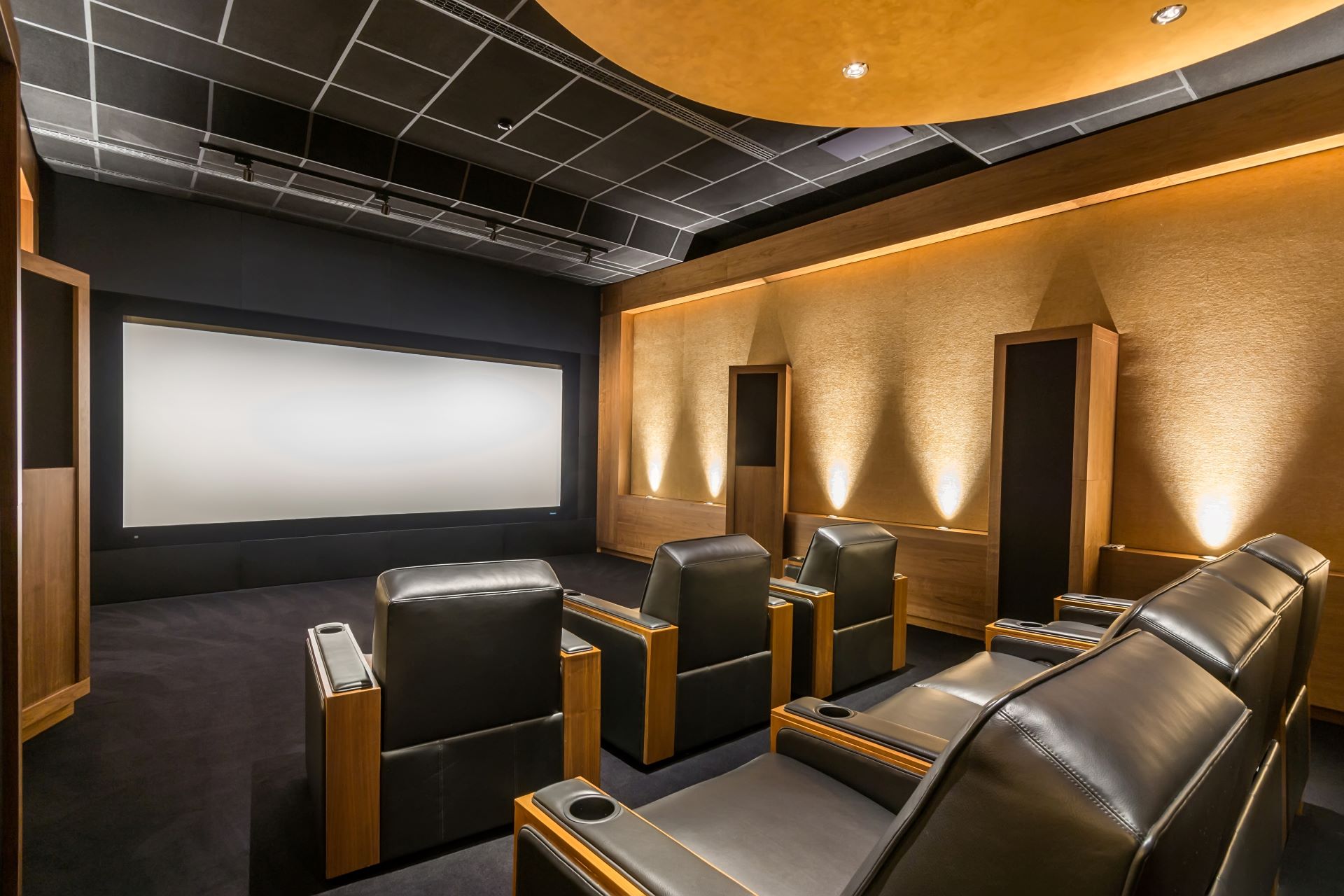
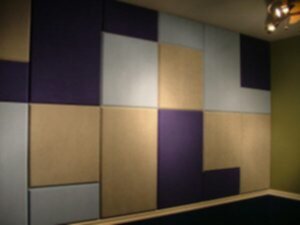
Many homeowners worry that bass traps will make the theater look too industrial. But today’s products blend effortlessly with high-end interiors. Fabric wrapped acoustic panels come in dozens of colors and textures. PET felt options add a modern aesthetic. Wood accent faces introduce warmth, and curved front modules can echo the look of luxury cinema design.
Removable grills or frames allow access to wiring or equipment while keeping the room clean and cohesive. You don’t have to sacrifice style to gain performance.

Measuring Success (Without Getting Lost in Graphs)
A basic measurement mic is enough to show whether your efforts are working. Focus on everything below 200 Hz – this is where the problems live and where fixes matter most. You’ll hear improvements in several ways:
- Bass becomes tighter and more controlled.
- Dialogue gains clarity.
- Every seat delivers a similar experience.
- Immersive surround sound clarity improves because the low end no longer masks details.
Graphs help confirm changes, but your ears will tell the story just as convincingly.
Acoustic Geometry Playbook – Recommended Approaches
Corner First Approach (Most Rooms)
For most home theaters, the smartest place to start is the corners – especially the trihedral intersections where bass pressure is naturally strongest. Stacking corner modules floor-to-ceiling offers the biggest improvement for the least amount of wall space. This immediately shortens decay times, evens out seat-to-seat response, and gives subs a more controlled environment to work in.
Rear-Wall Control
If your back row sits close to the rear wall, this surface becomes a major source of low-frequency reflections. Adding deeper broadband modules or membrane-enhanced traps here helps reduce modal buildup and late reflections that smear dialogue. It’s one of the fastest ways to make the entire room feel tighter and more intelligible.
Soffit Runs
Long ceiling-wall edges are perfect for continuous trapping. Soffit runs behave like extended bass absorbers, smoothing modes that stretch the length or width of the room. They complement corner traps by handling the resonances that single modules can’t fully excite.
Finishing Touches
Once the low end is controlled, mid/high treatment – using fabric-wrapped or wood accent panels – brings back a natural balance. These finishing touches fine-tune clarity without changing the overall character of your home theater.
FAQs
How many traps do I need for a 12×18 foot room?
Most theaters that size benefit from two to four large corner traps plus some rear-wall absorption. Measuring response and decay will help you decide if you need more.
Do traps go behind an acoustically transparent screen?
Yes – and it’s a great idea. Placing traps behind an acoustically transparent screen is an easy way to add low-frequency control without changing the look of the room.
Will traps make my theater too dead?
No. Low-frequency absorption affects modal behavior, not the lively mid/high character of the room.
Can I DIY some traps and add branded corner modules later?
Definitely. Many theaters begin with DIY broadband traps and later add specialized corner modules or tuned traps.
When all is said and done, the difference is easy to hear. With the right combination of placement, measurement, and design, bass traps transform muddy, uneven bass into a smooth, punchy foundation that elevates every movie, every game, and every seat in the room.
Get Expert Help from Acoustic Geometry
Ready to take the guesswork out of your studio acoustics? Whether you’re just getting started or fine-tuning an existing setup, Acoustic Geometry can help. Share your room’s dimensions, goals, and gear, and our team will create a custom treatment plan—complete with layout maps, product recommendations, and ongoing support. Contact us today to transform your space into a studio that sounds as good as it looks.

About author








Add comment
You must be logged in to post a comment.