
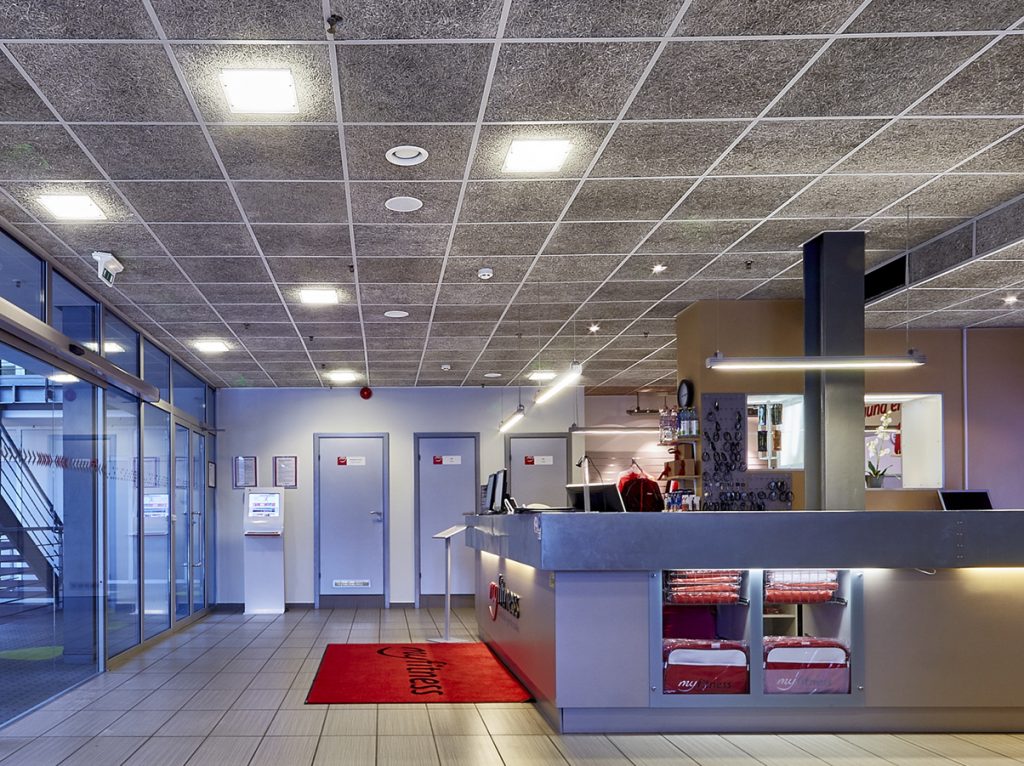
Sound is often one of the most pressing challenges in small spaces. Be it footstep noise coming up through the ceiling, noise from HVAC systems mounted overhead, or sound waves just bouncing around your walls and ceiling, knowing how to soundproof a ceiling can be the difference between a highly-productive and highly quiet space.
In this article, we’ll walk you through the key soundproofing principles, materials, and methods specifically suited to highly quiet environments, from resilient channels to Green Glue compound so you can make the most of your space.
Understanding Soundproofing in Small Spaces
Before we talk about specific installation methods and products, it’s important to make sure we’re all on the same page about what soundproofing actually is and how it differs from sound absorption.
Soundproofing is about preventing sound from either getting into a room or from leaving a room. This involves blocking or reducing sound transmission through a structure or a series of structures.
Sound absorption, on the other hand, is about improving room acoustics, which means focusing on the inside of a room and using materials to absorb and reduce reverb, echoes, or flutter.
In studios and offices, these two soundproofing goals often overlap, but have different solutions, and we want to address both in small spaces. If you’re wondering how to soundproof an apartment ceiling, for instance, please understand that blocking a noticeable / audible amount of sound, some construction is always required, so in some instances, treatment may or may not be a feasible option.
Airborne vs. Impact Noise in Studios and Offices
Sound travels in two main ways:
| Noise Type | Examples | Best Treatments |
| Airborne Noise | Talking, music, TV | Mass + sealing + damping |
| Impact Noise | Footsteps, moving furniture | Decoupling + damping + structural isolation |
Airborne noise travels through the air and is best reduced by sealing gaps, adding dense layers (like drywall and mass loaded vinylMLV), and using Green Glue damping compound and additional layers of drywall.
Impact noise, on the other hand, travels as vibrations through structures. Footfalls and furniture dragging are common examples and require decoupling strategies using products like RSIC clips ceilings and resilient channels or products like Green Glue which is a vibration dampening compound. An impact noise ceiling strategy, for instance, focuses on decoupling and vibration isolation to handle footsteps, dragging chairs, or machinery from above.
Building Construction Matters
The materials used in your building also have a significant impact on how sound is transmitted. A concrete ceiling in an office will have different soundproofing considerations compared to a wood joist structure in a studio space.
- Wood Joists + Drywall: Found in many studios and older office buildings. Vulnerable to both airborne and impact noise.
- Concrete Slabs: Common in commercial builds. Great for airborne noise but still transmits impact noise unless floated or decoupled.
- Hollow Floor Systems: These amplify footfalls and machinery vibrations. Soundproofing between floors becomes critical.
Key Considerations Before You Begin
Before you jump into a project, it’s important to consider a few things that are unique to your small space and situation before you start purchasing tools and materials.
Is the Ceiling Shared?
Shared ceilings in commercial office spaces or shared apartments means noise from adjacent units. It’s important to first identify whether you have a shared ceiling space and whether you can make any modifications in the first place (which will be guided by building codes).
Ceiling Height and Access Limitations
Ceiling heights in small spaces are often low, and this can be a major limitation for what methods can work for you. You won’t likely have access or clearance for things like suspended ceilings, bulk insulation, or some other methods. Look for low-profile soundproofing products that can still provide great performance with minimal impact.

What’s Above You?
Noise from above can come from other tenants, machines, or infrastructure. If the source is mechanical, like an HVAC unit, vibration control becomes critical. In these cases, soft insulation won’t help. Instead, you’ll need to think in terms of decoupling and sound dampening.
Understanding the type of noise and its origin is key to tailoring the solution:
- Is the sound airborne noise or impact noise/vibration?
- Your approach depends on noise type, ceiling structure and what changes are allowed to the building.
Just keep in mind that insulation, the light, soft, fluffy stuff-in batt type material, doesn’t block sound. While acoustic insulation doesn’t block noise on its own, it works in tandem with drywall and damping compounds to absorb airborne sound within ceiling cavities and is ALWAYS good to use as part of the wall assembly A wall assembly with an insulation filled cavity will always reduce more sound than a hollow wall.
Combatting noise from upstairs neighbors requires a combination of impact noise isolation and vibration damping, especially in apartment settings.
The Four Soundproofing Principles for Ceilings
Soundproofing isn’t just a matter of installing acoustic panels. Achieving effective ceiling noise reduction in tight spaces requires a combination of mass, damping, decoupling, and proper sealing. These four key principles are the foundation for an effective soundproofing strategy, and especially in small spaces, where installation precision is critical.
1. Add Mass
Adding mass helps to block airborne noise. MLV for ceilings offers a dense but flexible barrier that’s ideal for adding soundproofing mass without reducing headroom. Use dense but thin materials such as:
- Double layers of drywall
- Mass Loaded Vinyl (MLV): Install directly to joists before drywalling
- Soundproof sheetrock
2. Decouple the Ceiling
To prevent sound vibrations from traveling directly into your space, you can decouple ceiling joists using RSIC clips or resilient channels. Resilient channels for ceilings are one of the most effective tools for decoupling drywall from joists to reduce impact and structure-borne noise. This can be done by:
- Use resilient channels or RSIC clips to create air gaps between layers
- For low-clearance ceilings, opt for RSIC-1 LP clips, which are designed for minimal profile
 3. Dampen Vibrations
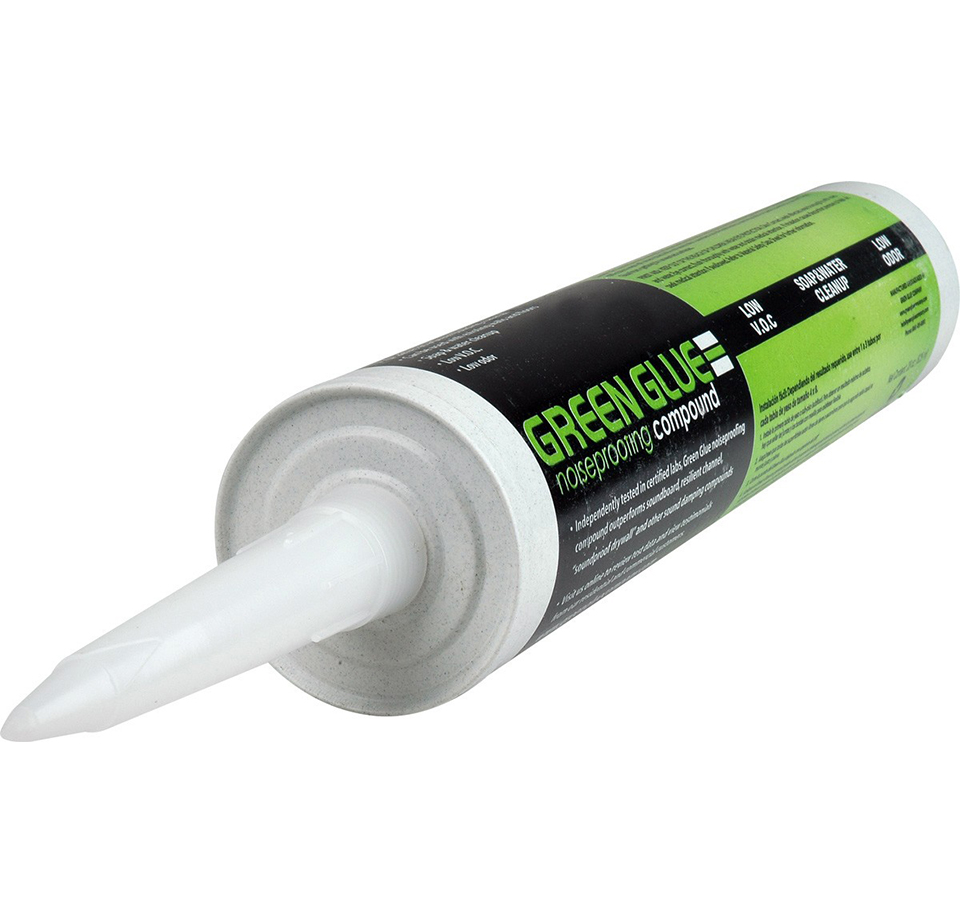
Damping absorbs the energy of a sound wave. The best way to soundproof a ceiling using damping is to sandwich Green Glue damping compound between two layers of drywall.
- It transforms vibrational energy into inaudible and harmless heat
- It’s perfect for studios and budget-conscious offices using Green Glue
4. Seal All Gaps
Even a tiny opening can let significant noise through.
- Use acoustical sealant around can lights, electrical boxes, and drywall seams
- Make sure the perimeter of the ceiling is completely sealed to block sound leaks
Common Ceiling Soundproofing Methods in Small Spaces
There are several soundproofing methods that are common in small spaces. Here we break them down with their trade-offs and some specific product recommendations for small rooms.
Retrofitting Existing Ceilings
Ceiling retrofitting is a great way to soundproof without tearing down the whole ceiling:
- Attach RSIC-1 Retro Clips to the existing drywall – Important: Punch holes in the existing drywall layer between the studs/joists first to avoid a “triple leaf effect,” which can amplify sound rather than reduce it
- Add a new layer of drywall with Green Glue between the two layers
Drop Ceilings (Where Feasible)
While standard tiles offer minimal isolation, drop ceiling soundproofing can be improved by backing tiles with drywall or using specialty absorptive tiles.
- Drywall Backing: Laying drywall onto the backs of ceiling tiles improves mass and absorption
- PVC Decoupler: This product can be laid onto the back of the tiles to reduce vibration, but it can cause the tiles to droop or sag over time due to the fact that it is not a rigid product and the material is heavy , making it a less ideal long-term solution
- This setup is best suited for spaces with enough vertical clearance. Keep in mind: it won’t block sound between rooms, but it will helpto reduce noise from coming into the space.
Use of Acoustic Panels
Acoustic panels don’t really block noise, but they greatly improve room acoustics and are used for echo absorption. Acoustic ceiling panels are a practical choice for improving clarity and reducing echo in small office or studio settings:
- Ideal for conference rooms, voiceover studios, or podcasting booths
- Combine with soundproofing methods for a comprehensive solution
Take a look at our wide assortment of absorptive options.

Product Recommendations for Small-Space Ceilings
Home studio soundproofing typically involves layering drywall with damping compounds and sealing all gaps to control both sound bleed and reverb.
Soundproofing Products
| Product Type | Application Area | Ideal Use Case |
| Green Glue | Between drywall layers | Apartments, home studios |
| MLV | Above ceiling surface – directly installed to studs or joists. | Commercial offices, drop ceilings |
| RSIC-1 LP | Decoupling | Low-ceiling apartments |
| Acoustic Panels | Echo control | Zoom rooms, home offices |
Absorptive Products
| Product | Application | Best For |
| Acoustic Panels | Echo and flutter reduction | Zoom rooms, podcast studios |
| Bass Buster™ | Targeted low-frequency absorption | Music production rooms |
- Note: Hanging baffles and clouds are not ideal for small spaces with low ceilings. Baffles and clouds are only feasible in spaces with 18-20’ tall ceilings or higher.
Cost and Installation Tips
Cost can be a consideration with some methods and materials, but in small spaces, the labor is often DIY-able if you take the time to do it right.
Budget-Friendly Options
If you have a limited budget and want to soundproof a ceiling as inexpensively as possible, then:
- Start with Green Glue and a second drywall layer as an affordable ceiling soundproofing solution
- Focus on your biggest noise problem, which is often impact noise
- DIY-friendly installs are possible, but precision matters
When to Hire a Pro
If you’re in a situation where you need to soundproof shared condo ceilings or commercial office spaces, dealing with structural modifications, or if you have mechanical equipment or vibration-related noise overhead, then a pro installer is recommended.
Hire a pro if:
- You’re soundproofing shared condo ceilings or commercial office leases.
- Structural modifications are required.
- There’s mechanical equipment or vibration-related noise overhead.
Final Thoughts: Getting the Best Results in Small Spaces
Effective office ceiling soundproofing helps reduce distractions, protects privacy, and improves productivity. Soundproofing in small spaces is all about strategy and knowing how to soundproof a ceiling in a small space like a studio means having an in-depth understanding of your building and the types of sound it faces. If you have machinery overhead, for instance, then you’re really dealing with vibration isolation. If the problem is echo bouncing around, then you want to prioritize acoustic panels. If the whole ceiling is just a giant sound leak, then you need to look at sealing gaps, decoupling, and damping.
AcouGeo offers the best way to soundproof a ceiling with customized soundproofing solutions for all types of small spaces, whether you’re retrofitting an existing home studio, upgrading your office ceiling performance, or starting from scratch in a new build. Get in touch with Acoustical Geometry for advice and customized product bundles specific to the room type you’re trying to solve for. With the right materials and techniques, from Green Glue to resilient clips to MLV, you can get professional-level soundproofing performance and acoustic panels even in the smallest of spaces.
Ready to get started? Browse ceiling soundproofing products or build your bundle with expert guidance from our team.













Add comment
You must be logged in to post a comment.