

10 Acoustic Myths Busted: What Really Works for Better Sound
Egg cartons on the wall. Foam that supposedly “soundproofs.” The idea that an EQ can magically fix a bad room. Few topics in audio are surrounded by as many half-truths as acoustics, and these acoustic myths persist because they almost sound plausible.
In this guide, we’ll bust the ten most common misconceptions about room acoustics and sound isolation – and replace them with what actually works. Each myth opens with the belief, follows with the reality grounded in acoustic principles, and ends with a practical path forward that you can apply in real rooms, from home studios to listening spaces and commercial installs.
Preview of the myths we’ll bust (and the truth behind each):
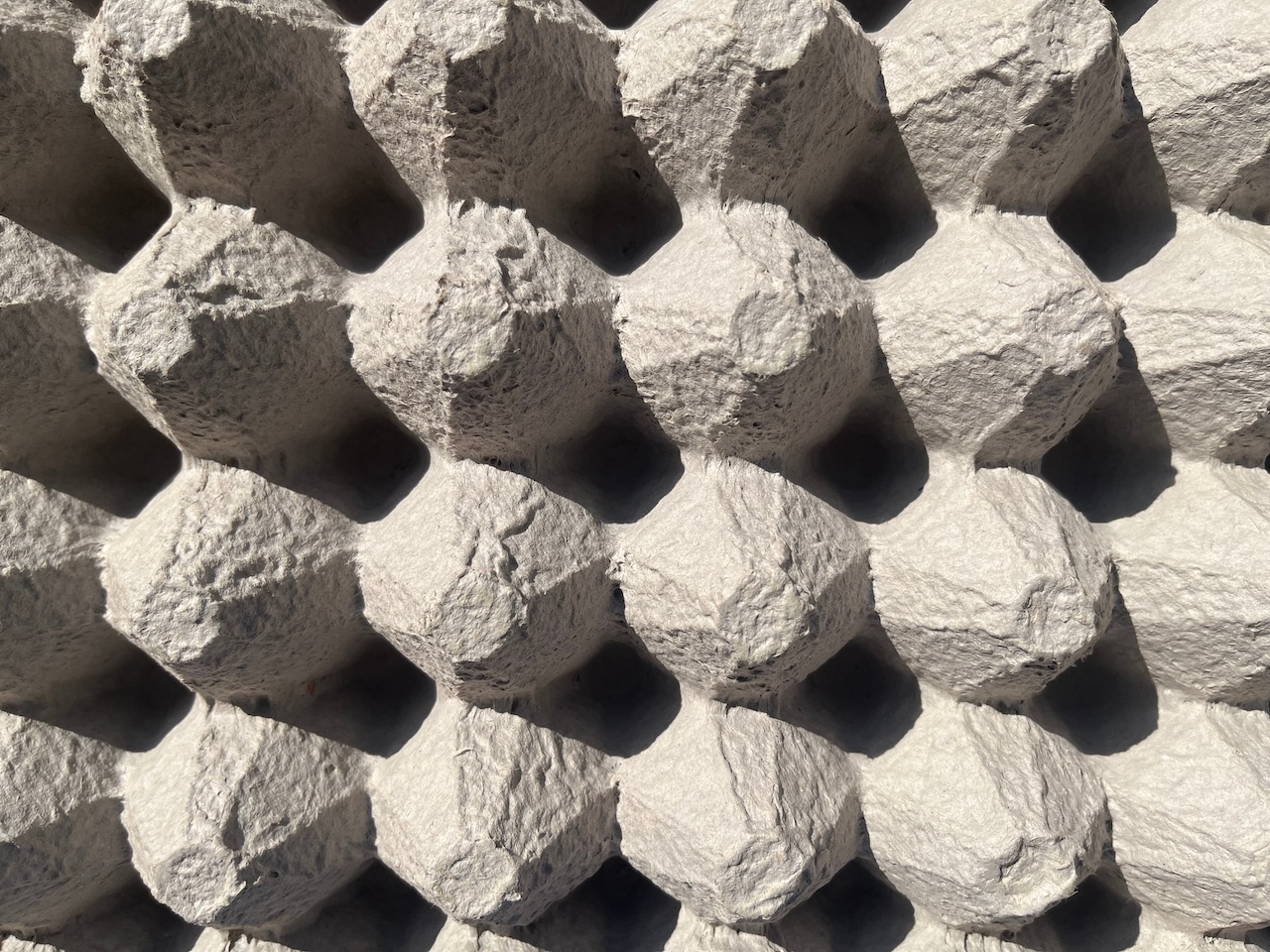
- Egg cartons are a cheap acoustic fix → Recycled fiber cartons that physically hold eggs don’t do anything at all from an acoustical standpoint. They don’t soundproof a room and absorb an inaudible amount of sound.
- Acoustic foam = soundproofing → Foam treats reflections; isolation requires mass, airtightness, and decoupling.
- More absorption is always better → Over-dead rooms (ones with too much absorption) sound unnatural and fatiguing.
- One big panel fixes bass → Low frequencies need volume, placement strategy, and multiple solutions.
- EQ replaces treatment → DSP (Digital Signal Processing) can’t fix time-domain problems like reflections and decay.
- Traditional fabric window Ccurtains or blankets will soundproof → They tame highs, not noise transmission.
- Toe-in always sounds better → It depends on speaker design, room, and listener.
- You must pressurize the whole room for bass → Smart subwoofer placement matters more than sheer output.
- Bigger speakers always sound better → Room size and acoustics matter more than driver count.
- NRC tells you everything → NRC doesn’t measure down into the very-low frequencies that cause most problems.
If you’ve ever wondered why well-intentioned fixes don’t deliver the sound you expected, these acoustic myths are usually the reason.
Table of Contents: 10 Acoustic Myths
- Soundproofing vs. Acoustic Treatment – They’re Not the Same
- Myth #1: “Egg cartons are a cheap acoustic fix (or even soundproof!)”
- Myth #2: “Acoustic foam = soundproofing”
- Myth #3: “More absorption is always better”
- Myth #4: “One big panel behind speakers will fix the bass”
- Myth #5: “EQ / room correction can replace acoustic treatment”
- Myth #6: “Thick curtains or moving blankets will soundproof”
- Myth #7: “Toe-in always sounds better”
- Myth #8: “You must ‘pressurize’ the entire room to get good bass”
- Myth #9: “Bigger speakers always sound better”
- Myth #10: “NRC tells you everything about a panel“
- Putting it Together: A Practical Treatment Plan for Any Room
- Acoustic Geometry Playbook – Where Our Products Slot In
Soundproofing vs. Acoustic Treatment – They’re Not the Same
Before diving into the myths, we need to clear up the most common source of confusion: soundproofing vs acoustic treatment.
Soundproofing (isolation) is about blocking or reducing sound from entering or leaving a space. It relies on structural principles such as the mass-air-mass principle, airtight construction, and mechanical decoupling. Think double drywall, sealed doors, resilient channels or decoupling clips, and assemblies like double stud wall soundproofing. This is where having concepts like STC rating explained actually matters.
Acoustic treatment, on the other hand, is about shaping or tuning the sound inside the room. It addresses reflections, decay time, frequency balance, and clarity using absorption and diffusion. This is where broadband absorber panels, bass traps, and diffusers come into play – and where metrics like the NRC absorption coefficient are relevant (with caveats we’ll cover later).
Many acoustic myths exist because these two goals get blended together. Treating reflections won’t stop sound from leaking into the next room, and adding mass won’t fix echo or muddiness inside the space.
Myth #1: “Egg cartons are a cheap acoustic fix (or even soundproof!)”
Reality: Egg cartons don’t soundproof – and their absorption is minimal, inconsistent, and frequency-limited.
Egg cartons became an acoustic myth because their shape looks like a diffuser or absorber. In reality, their thin paper construction provides almost no mass (so no isolation) and negligible absorption below the upper treble range. They do nothing meaningful for bass, lower mids, or even controlled midrange absorption.
From a safety standpoint, they’re also flammable and unsuitable for permanent installations.
What to do instead:
Use purpose-built treatment designed around real acoustic data.
- Install broadband absorber panels made from fiberglass, cotton, polyester fibers or mineral wool at first reflection points on side walls and ceilings – an approach that consistently outperforms acoustic foam when comparing mineral wool vs acoustic foam for broadband control.
- Add bass traps for small rooms in corners and wall-ceiling junctions to address low-frequency buildup.
Myth #2: “Acoustic foam = soundproofing”
Reality: Foam treats reflections; it doesn’t stop sound from escaping.
Acoustic foam is lightweight and porous. That makes it useful for reducing flutter echo and high-frequency reflections, but completely ineffective for isolation. It adds no mass, doesn’t improve airtightness, and doesn’t break structural vibration paths.
This myth often shows up when people complain that their neighbors can still hear everything after “soundproofing” with foam.
What to do instead:
For isolation, focus on construction details:
- Add mass with additional drywall layers.
- Decouple structures using decoupling clips and hat channel.
- Seal flanking paths and airtightness issues around doors, outlets, and penetrations.
- Upgrade doors with proper door seals for sound isolation and thresholds.
Myth #3: “More absorption is always better”
Reality: Too much absorption can make a room sound lifeless and fatiguing.
Blanket-covering every surface often results in a room that measures “quiet” but feels uncomfortable to work or listen in. Speech sounds dull, music loses energy, and stereo imaging collapses.
Good rooms strike a balance between absorption and diffusion. Understanding acoustic diffusion vs absorption is key here.
What to do instead:
Design toward a target decay time.
- Choose an RT60 target by room type (for example, ~0.3-0.5 seconds for small control rooms).
- Use absorption to control early reflections and decay.
- Add diffusion on rear walls or ceilings to preserve spaciousness without adding echo.
Read More: How to Calculate the Number Of Acoustic Panels You Need
Myth #4: “One big panel behind the speakers will fix the bass”
Reality: Bass problems are spatial, modal, and volume-dependent.
Low frequencies interact with the room through room modes and standing waves. A single panel – even a thick one – can’t address modal buildup throughout the space. Bass energy collects in corners and boundaries, not just behind speakers.
What to do instead:
Think in terms of coverage and volume.
- Use corner bass traps where pressure is highest.
- Treat wall-ceiling junctions.
- Combine multiple traps rather than relying on a single oversized panel.
- Measure before and after to confirm improvements in decay and smoothness.
Read More: What Is A Bass Trap?
Myth #5: “EQ / room correction can replace acoustic treatment”
Reality: DSP fixes frequency response, not time-domain behavior.
Modern room correction is powerful, but going with DSP room correction vs treatment is an inadvisable choice. EQ can’t remove early reflections, shorten modal decay, or fix comb filtering caused by poor geometry.
What to do instead:
Use DSP as the final step, not the first.
- Treat first reflection points and address modal issues physically.
- Once decay and imaging are controlled, apply EQ to fine-tune tonal balance.
This hybrid approach consistently outperforms DSP-only solutions.

Myth #6: “Thick curtains or moving blankets will soundproof”
Reality: Soft fabrics absorb some highs but provide no isolation.
Curtains and blankets may reduce brightness in a room, but they lack the mass and airtight construction required to block or even reduce sound transmission through a wall, window or door.
What to do instead:
If isolation is the goal:
- Use Quilted Noise Barrier Curtains with a center layer of mass loaded vinyl.
- Seal doors with proper gaskets and thresholds.
- Address gaps and penetrations with acoustical caulk.
- Upgrade wall assemblies rather than layering soft materials
Myth #7: “Toe-in always sounds better”
Reality: Optimal toe-in speaker positioning depends on speaker design and listener preference.
Some speakers are voiced for on-axis listening, others for a controlled off-axis response. Excessive toe-in can narrow the soundstage; too little can soften imaging.
What to do instead:
Start with the fundamentals.
- Form an equilateral triangle between speakers and listener.
- Adjust toe-in incrementally while listening and measuring.
- Use sweeps or pink noise to confirm tonal balance at the listening position.
Myth #8: “You must ‘pressurize’ the entire room to get good bass”
Reality: The phrase is misleading and often misapplied.
Good bass at the listening position doesn’t require energizing every cubic foot of the room. Strategic subwoofer placement and integration can deliver smoother response with less overall output.
What to do instead:
- Experiment with multiple subs to average room modes.
- Try a near-field subwoofer setup to reduce modal influence and improve tactile response.
- Measure placement options rather than guessing.

Myth #9: “Bigger speakers always sound better”
Reality: Speaker size must match the room.
Large speakers in small rooms often excite problematic modes and overwhelm the space. Without proper treatment, they can sound worse than smaller, well-matched systems.
What to do instead:
- Match speaker output and directivity to room size.
- Treat first reflections and bass issues before upgrading speakers.
- Integrate subs carefully for controlled low-frequency extension.
Myth #10: “NRC tells you everything about a panel”
Reality: NRC is incomplete.
The NRC absorption coefficient is an average of mid-band absorption (250 Hz-2 kHz). It says nothing about very low-frequency performance, which is where most rooms struggle.
What to do instead:
- Compare full absorption spectra.
- Pay attention to panel thickness and air gaps.
- Evaluate performance below 250 Hz, not just the headline number.
Putting It Together: A Practical Treatment Plan for Any Room
Once the major acoustic myths are out of the way, the path forward becomes much clearer. Good rooms aren’t built by chasing individual problems in isolation – they’re built by following a repeatable process that balances acoustics, usability, and budget.
- First, address basic isolation weaknesses if noise transfer is a concern. Sealing doors, improving flanking paths and airtightness, and fixing obvious gaps often yield meaningful improvements without major construction. Measure the room, listen critically, and iterate – acoustics is an optimization process, not a one-step fix. This should be your first step because of the fact that it often involves some level of construction, which is harder to accomplish after the room is finished.
- Moving on to acoustic treatment, start by identifying how the room will actually be used. A podcast studio, mixing room, home theater, and conference space all demand different decay times and spatial impressions. Defining the use-case allows you to select an appropriate RT60 target by room type, which becomes the benchmark for every decision that follows.
- Next, control early reflections. Treating first reflection points on side walls and ceilings with 2-4” broadband absorber panels or curve diffusers improves clarity, stereo imaging, and speech intelligibility immediately. This step alone often produces the biggest perceived upgrade, especially in untreated rooms.
- Low-frequency control comes next. Bass problems rarely disappear on their own, and EQ alone can’t shorten modal decay. Adding corner bass traps – especially floor-to-ceiling where possible – helps manage room modes and standing waves by increasing absorption where pressure builds up. In small rooms, more volume of treatment usually matters more than chasing exotic designs.
- Once reflections and bass are under control, evaluate whether the room feels overly damped. This is where acoustic diffusion vs absorption becomes important. Rear-wall or ceiling diffusion can restore a sense of space and depth without increasing echo or reintroducing comb filtering.
Acoustic Geometry Playbook – Where Our Products Slot In
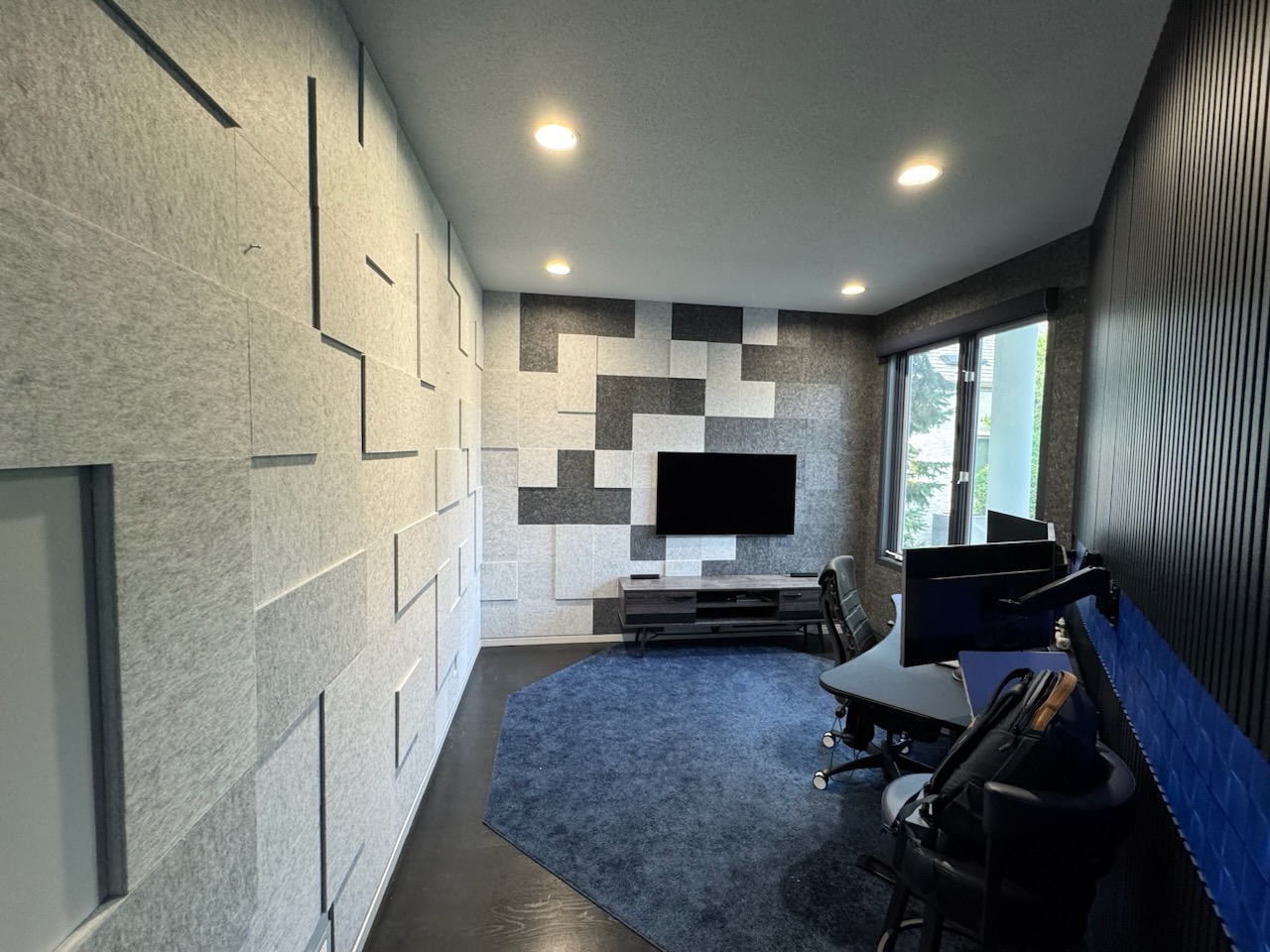
At Acoustic Geometry, our product ecosystem is designed to support this exact workflow – not to override it. We focus on modular, data-backed solutions that can be scaled and combined as a room evolves.
For early reflection control, our 2-4” wall and ceiling panels – including suspended cloud kits – are engineered to deliver consistent broadband performance without relying on inflated NRC claims. These panels are typically the foundation of any successful treatment plan.
Bass management emphasizes coverage and placement rather than token solutions. Our corner and soffit bass traps are designed to add meaningful absorption volume, particularly in small and mid-sized rooms where low-frequency decay is hardest to tame.
To prevent rooms from feeling over-damped, we offer diffusion options that integrate cleanly with absorptive layouts. Used strategically on rear walls or ceilings, diffusion restores liveliness while preserving control – especially valuable in critical listening and creative spaces.
On the isolation side, we focus on the most cost-effective upgrades first: door seals for sound isolation, thresholds, and gasketing systems that address common leakage points. For projects requiring higher isolation targets, we guide clients toward appropriate assemblies involving decoupling, added mass, and professional construction methods rather than oversimplified promises.
The goal isn’t to sell more panels – it’s to help designers, integrators, and end users move beyond persistent acoustic myths and build rooms that perform as intended, both on paper and in practice.

About author










Add comment
You must be logged in to post a comment.